
A Brief History of Modern Secured Credit - CardsFTW #213
Plus, new cards from Samsung, USAA, and more
Some Cards Are Not Revolving Loans
Despite the last few weeks’ posts, I don’t only pay attention to rewards cards. For the last five-plus years, I have been fascinated by the growth of what I will call “modern” or “alternative” secured cards. Broadly speaking, this category could include both the new breed of cash-secured cards, like Chime’s (which I will cover below), as well as modern asset-backed cards like Aven, Yendo, and others. (Heck, we put on a panel at CardCon 2023 on this topic!)
Cash-secured cards aren’t new. Traditional issuers like Capital One/Discover and Bank of America offer them, as do most mainline banks. Less consumer-friendly issuers in South Dakota offer them, too. I helped build a secured Visa Card at Green Dot in 2006-2007 (it was also not that friendly).
Over the past few years in fintech, though, we’ve seen continued innovation here: SoFi just launched its Smart Card and Walmart’s OnePay launched the Builder Card. These join Varo Believe, Step, Super, and others who may or may not still have their cards in market (cred.ai anyone?) In addition to these integrated cash-secured credit and charge products, companies like Extra and Mine (fka Fizz) offer a weird take on a debit card credit builder.
It all seems like everyone is crowding into the same path, but when I look, I see a lot of variations in trying to solve two fundamental problems:
- People with bad credit want to build credit (but companies don’t want to extend credit to them due to the risk)
- People want credit cards for access to capital and prestige
Let’s dig in.
A Primer on Traditional Secured
The traditional secured card is very simple: a user isn’t creditworthy, so you can demand collateral from them. Applicants deposit cash that the bank holds in a separate escrowed account. The applicant receives a card with a credit line that matches that secured deposit (and, traditionally, a lot of fees).
Folks with good credit often get confused by a simple dynamic here: the secured deposit is not used to pay the bill unless and until the cardholder defaults. Each month, the user must come up with cash to pay at least the minimum payment on the card to stay current. By doing so, they are demonstrating that they see their statement, understand the payment demand, and can pay it.
If they default (and a lot of them do, unfortunately), then after 180 days, the secured deposit is liquidated to make the bank whole and the account is closed. This does the opposite of building credit.
Traditional secured cards have a few problems:
- People who really need access to small dollar capital do not have $200 to put on deposit
- People with bad credit scores have limited incentives to improve their credit (if you have a 570, defaulting on a card isn’t going to make a change that means anything to you day-to-day)
- Because of low transactional volume (many users charge up the full balance and pay the minimum), these cards are expensive to operate and carry high fees
- Because these products are targeted at disadvantaged communities and less sophisticated consumers, they carry high fees
(Three and four aren’t the same because a portion of the fee is justified by operational costs, while the portion noted in number four is just greed.)
What is Modern Secured Credit?
Chime launched this category to wide awareness with the 2020 launch of the Chime Credit Builder. It’s technically still a cash-secured credit card, but it doesn’t work in the traditional fashion. Chime links its users' everyday Chime deposit account to their card. If you have $1,000 in your Chime checking account, your credit builder has $1,000 available to spend. When you spend $200 on your credit card, Chime locks that $200 up so you can’t overspend. At the end of the statement, when the card is due (in full), they transfer the locked funds to pay off the card. (Yes, I am simplifying.)
This is great in many respects: the Chime card carries lower fees, doesn’t require locking money away, and automates many of the painful parts. Some of these same features are also challenges: if you can’t overspend or miss a payment (because it’s done for you), does that truly build creditworthy habits? Is it a reliable indicator of future credit behavior?
Many folks in underwriting say no. I hear that the use of these products is seen as a negative by larger banks, which may be the next step up on the underwriting ladder. On the other hand, autopay is a good way to have good credit! I autopay all my cards. This behavior is part of what makes me creditworthy! I’m clearly torn.
Framing the Competitive Set
While it might seem obvious that the Chime Credit Builder or the Varo Believe card (which operates on a very similar model) compete primarily with other credit cards, I’m not sure it does. In fact, the competitive set is a debit card (from the same or another company).
While Chime and Varo’s cards are very similar, Current has a different approach, creating a clearer single ledger view. In starker contrast, Extra pioneered a debit credit builder (one we powered at Apto while I was there), which uses open banking data to validate available-to-spend balances in a linked checking account at a non-affiliated institution, grants short-duration credit (1-3 days), and then attempts an auto-repayment via ACH. Mine (fka Fizz) operates very similarly, just very focused on college students.
Extra using phrases like “build credit without a credit card” and “the debit card that builds credit.” For their audience, credit cards may carry a negative aspect in that potential customers know you can spend your way into debt. Building credit is a known good (maybe you want to buy a car or house), but acquiring credit card debt is a known bad.
What’s Next?
I’ve been concerned for quite some time that these credit builder cards aren’t doing what they say: building real credit. Yes, I believe that scores go up in certain models with good behavior. Yes, I believe it is a net good to offer this opportunity to folks. However, if users graduate to full credit card products or other loans and exhibit bad behavior, then it simply isn’t working.
What we need to see is the companies behind these products launch unsecured products to put their own money at risk for their customers and demonstrate that they can build that graduation path. Many companies have tried to build subprime franchises and lost, while others, like Capital One and Mission Lane, appear to be winning.
I’ll be on the watch for unsecured, higher-limit cards (or loans) from companies like Chime and Current, as well as evidence that SoFi can graduate users from its new card to its more traditional products. Stay tuned.
Where is the Google Credit Card?
Well, almost seven years after market leader Apple launched the Apple Card, to align with its app store, subscription products, and hardware, Samsung announced the launch of the Samsung Galaxy Card in the U.S. Despite years of Google Pay and Google Wallet, now amongst the major wallet providers, only Google is missing an open-loop card.
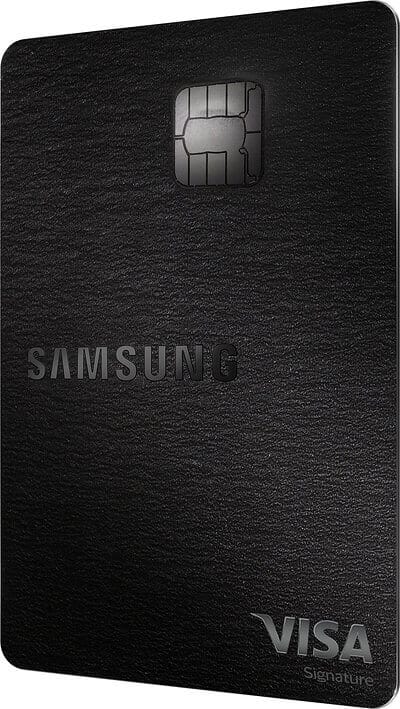
The new Samsung card will be issued by Barclaycard on Visa and starts accepting applications today. It’s a nice-looking metal card with a mostly predictable earning structure:
- 5% cash rewards on eligible purchases made directly with Samsung
- 3% cash rewards on purchases made with Samsung Wallet
- 2% cash rewards on streaming services, like Netflix, Disney+, and Spotify
- 1% cash rewards on all other purchases
If you have a Samsung Wallet and remember to pay that way where you can, then this card could stand out as 3% almost everywhere.
USAA Amex Cards
USAA, the membership-driven bank, announced new cards focused on cashback for its users. The Eagle AdaptTM Visa® Credit Card provides 3% cashback on the first $3000 per quarter in groceries, dining, home improvement, and gas; plus 1% everywhere else. The Eagle AscendTM American Express® Credit Card is a credit-building product with 2% cashback in the user's top spend category, plus 1% cashback everywhere else. Rounding out the trio of changes, the new Cashback Rewards Plus American Express®Credit Card has several accelerated categories:
- 5% cashback on $5000 in military base purchases
- 5% cashback on $3000 in gas stations
- 3% cashback in grocery purchases
- 1% everywhere else

All cards feature a big eagle, but I would like to note that the contactless logo isn’t in the same place on the Amex and Visa cards, and I don’t like that. Also, it’s interesting that the Visa is positioned as the top-tier card. As usual, larger FIs show their penchant for very long names. If you are a USAA member, these are solid offerings. If you’re not, you can start a group with Rob Gronkowski. (PS BTW, I think it’s weird when your main marketing message is about a guy who isn’t eligible to be a customer, which is why I bring this up every time I mention USAA.)
Nothing says bank with us like a non-member football player.
Quick Notes
It was a busy week in credit card land; a few quick articles that caught my eye:
- Visa Reimagines Visa Infinite for Asia Pacific's Modern Affluent: Yes, Visa Infinite Privilege and Visa Infinite Private for the rich and merely lower rich, respectively. Three tiers of ultra-premium cards are a lot, but necessary, I guess, to get the ultra-high-net-worth people interested. Plus, you get access to the new Visa Padel Program, showing how big that is these days.
- Mastercard announced an opening of their mobile payment ecosystem to help folks besides Apple, Google, and Samsung build mobile wallets. I need to dig into the details. This one could be amazing (the wallet of my dreams) or a dud, because you need issuer permissions and no one needs to replace the Apple wallet.
- Louisiana’s new debit card surcharge ban takes effect on August 1. I predict much noncompliance. Another mile marker in the back-and-forth between surcharges (yay, merchants sticking it to banks) and convenience fees (boo, merchants have hidden fees that are bad for consumers).
- Finally, CFPB, in a surprise, may go back to regulating credit card late fees. Biden-era CFPB was going to cap these at $8, but Trump-era CFPB hates regulations! What’s next? Nobody knows. One hand: protect the people. On the other: protect banks. So many battles.
CardsFTW
CardsFTW, released weekly on Wednesdays, offers insights and analysis on new credit and debit card industry products for consumers and providers. CardsFTW is authored and published by Matthew Goldman and the team at Totavi, a boutique consulting firm specializing in fintech product management & marketing. We bring real operational experience that varies from the earliest days of a startup to high-growth phases and public company leadership. Visit www.totavi.com to learn more.
Interested in reaching our audience? You can sponsor CardsFTW.