
PIN-less Debit - CardsFTW #135
Plus, A New Card from Hard Rock(!), and American Airlines card consolidation
Celebrate your love of finance, puns, and the holidays with our super sale on GoldmanSocks. Use code "SOCKSFTW40" for 40% through December 18th.
Hard Rock

Hard Rock, the hotel and casino chain now owned by the Seminole Tribe of Florida, announced its first-ever co-branded credit card for its Unity Loyalty Program. Everything ‘90s is new again. The original Hard Rock Cafe was founded in 1971, but for me, it all screams of the 1990s, when its Hard Rock Hotel in Las Vegas first opened. Today, the chain includes 165 restaurants, 24 hotels, and 11 casinos across 74 countries!
Unity by Hard Rock is “a global loyalty program unlike any other, designed to reward you for doing what you love.” OK, but actually, that’s how most loyalty programs describe themselves. I have always had a few moral qualms about gambling-related loyalty and rewards programs, but my biggest concern with Unity is using “U” where there should be a “you.”
As in:
“Wherever U go, Unity by Hard Rock helps you rack up Unity Points & Tier Credits with every qualifying purchase. Unity by Hard Rock makes it simple (and fun) to earn rewards with activities you already enjoy!”
Cringe - as the kids say.
Unity rewards members earn 3 points per dollar at cafes, non-casino hotels, and Rock Shops, 1 point per dollar on non-gaming spend at casinos, and some number of points at casinos for gaming that varies by casino. Never before have I seen a chart like this:

The new credit card sports the tagline “Welcome to limitless possibilities.” By which, they do not mean the card doesn’t have a credit limit, it does. I’m surprised the legal team didn’t require a footnote there.
With the card, your earnings are amped up at 5x at non-casino locations, 4x on non-gaming spend at casinos, 2x at restaurants and grocery stores, and 1x everywhere else. It’s counterintuitive to imply that you earn less when gaming, but there’s probably some regulatory issue in there I don’t care to learn about.
The card also earns a 5,000-point bonus with $5000 in annual spend and has a 10,000-point sign-up bonus when you spend $1000 on purchases outside of Hard Rock.
The card is issued by Comenity Capital Bank, one of the largest co-brand card issuers in the U.S. Unity points generally appear to be worth $0.01.
American Airlines
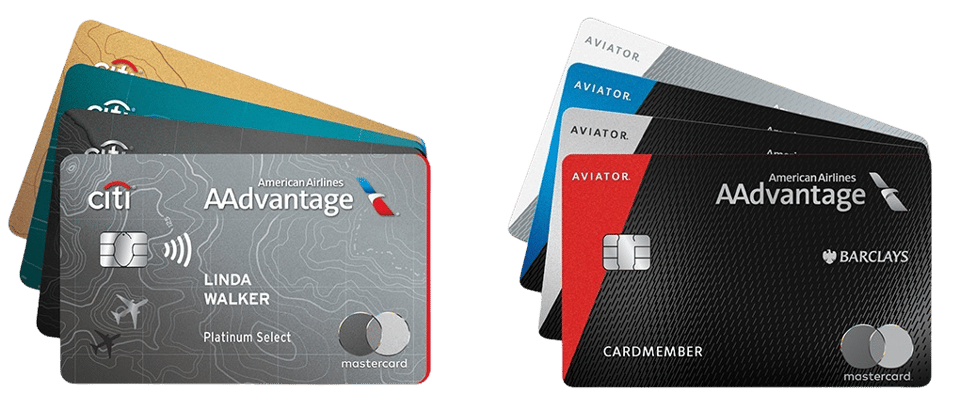
The other big news last week is that American Airlines is finally consolidating its co-brand credit card partnerships, dropping Barclaycard, which snuck into American Airlines via its previous work with US Airways pre-acquisition. Citibank, which has been American’s co-brand issuer since the beginning, nearly 40 years ago, will once again be the only co-brand credit card partner of the airline.
Citi will acquire the existing Barclaycard portfolio and transition all card members in 2026. The move is one that I’ve been expecting for years. I imagine we will eventually see a similar consolidation at Marriott, which carries two issuers (Chase and Amex) also due to an acquisition.
Travelers will still have many choices, as Citi offers a variety of cards:
- American Airlines AAdvantage® MileUp® Card
- Citi®/AAdvantage® Platinum Select® World Elite Mastercard®
- Citi®/AAdvantage® Executive World Elite Mastercard®
- Citi®/AAdvantage Business™ World Elite Mastercard® for business owners.
Nothing gets me like the slash in these names. Worse than “U”.
PIN-less Debit
We’re overdue for a deep dive for our paid subscribers. This week, I will dig into PIN-less debit and uncover how it’s affecting the economics of debit card programs in fintech.
Debit card interchange in the United States is highly regulated, thanks to The Dodd-Frank Wall Street Reform and Consumer Protection Act of 2010. Most conversations over the years have focused on the interchange cap set by the Federal Reserve for large banks (those with more than $10B in assets). Smaller banks (aka Durbin-exempt banks) can charge a higher rate, which has led to the explosion of fintech products. Over the last decade, until mid-2023, these products have been able to earn much higher rates.