
It's More Than a Credit Card - CardsFTW #115
Plus, Julie VerHage-Greenberg and I are cohosting a podcast!
How Money Moves Podcast
Before we dive into this week's post, I am excited to share that Julie VerHage-Greenberg and I have teamed up for a new This Week in Fintech payments podcast series called How Money Moves. During these five episodes, we will explore everything from global payments to how people and their friends pay for dinner. Each week, we will bring together fintech leaders who will share their experiences, insights, and innovative approaches.
In our debut episode, Julie and I explored the complexities and innovations of the payments landscape in Africa with guests Kiaan Pillay from Stitch and Yele Oyekola from Duplo.
More Than a Credit Card
We talk about credit cards first as payment tools–they allow you to buy something that you pay for later. The merchant knows the network will pay them in a few days, and you know the bank will get its money sooner (or later).
Yet, they are more than payment tools. This concept isn't new. American Express has long differentiated itself in consumer marketing with the idea of a "cardmember." At AMEX, you're not a cardholder; you're a member. The original AMEX (what we think of today as a "Green AMEX") included a membership fee (as did most cards; Discover changed the model in 1983 with its no-annual-fee launch).

A great example of American Express's broader membership approach is its content marketing. For many years, Platinum cardholders received Departures magazine, a tradition dating back to the 1960s with an earlier iteration, Travel + Leisure. The Departures magazine stopped publication at the start of this year.
Today, the idea of a card as a loyalty and rewards platform is commonplace. The growth in credit cards can be attributed to many factors: changing bank fees, reduced banking regulations, no-annual-fee cards, and travel loyalty programs. American Airlines introduced its co-branded card with Citibank in 1987, sparking the creation of hundreds of similar products.
Premium credit cards today offer rewards programs, lending, insurance products, merchant discounts and offers, airport lounge access, ticket presales, special entrances to sporting and event venues, and more. They are not just payment tools; they are lifestyle tools that enable their cardholders to feel savvy.
You communicate something about yourself when you carry an American Express Platinum Card or a Chase Sapphire Reserve. You are saying: I'm savvy, I'm affluent, I'm cultured.

"I'm cultured" is perhaps the most important in today's online, social-media-driven status-conscious culture. (I'm not saying we didn't care about status; we just couldn't consume indicators of everyone else's status all of the time.)
Although not a new concept, dining has become a particularly hot topic in the realm of credit card perks. Consumers today prioritize experiences. No longer is it enough (or perhaps even interesting) to have stuff. To be cool, you must experience things (and share them on Instagram or TikTok). The card issuers have noticed this and taken it to a new level.
Last week, Visa announced its new dining partnership with OpenTable for Visa Infinite cardholders. Visa Infinite is the highest tier of card available in the United States, with just a few cards, such as the Chase Sapphire Reserve, Capital One's Venture X, U.S. Bank's Altitude Reserve, and a few others. The program allows Visa Infinite cardholders to grab set-aside reservations at hot restaurants in major cities.
This announcement coincides with AMEX expanding its portfolio by adding Tock to its earlier acquisition of the restaurant reservation platform Resy. Both companies have a reputation for fancier and more desirable tables than the OpenTable's network, which is more middle-of-the-road.
Saturday's Wall Street Journal featured an extensive report on the market for reservations. People are using software to snag reservations and then selling them on marketplaces. The only people who really like this are the middle people, who make a ton of money without doing much. The restaurants don't like it–they want genuine relationships. (They also want to make the money themselves.)
The credit card comes in, using its weight to secure tables (even if it means acquiring the reservation platform) and then offering that as a benefit to consumers. As rewards are fundamentally capped by the interchange income earned by issuers (and a competitive market for lending), cards must continue to find ways to rise above the competition.
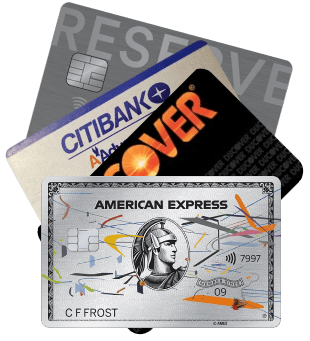
A similar trend is in airline lounges: The largest issuers (AMEX, Capital One, Chase) have moved on from negotiating for access to building their own airport lounges. A few years back, AMEX bought LoungeBuddy to enable broader access to airport relaxation.
Lounge access is one of the most popular credit card perks! I like an airline lounge as much as the next person, but for most people, it would be less expensive to pay to access one (or buy a Priority Pass yourself) rather than get a premium card to get access.
I might be making my own point here: it's not just lounge access. When I get a Platinum card, I get lounge access, plus rewards, plus a heavy metal card (possibly with cool artwork on it), plus offers, plus, plus, plus, plus. We love to be a part of something, and credit cards let us be a part of a members-only club that celebrates our consumerism but in a classy way (I think).
What's next? AMEX already has special entrances to great sports venues. Banks and networks sponsor golf, tennis, and almost every sport. Cards are ubiquitous. Will Chase start opening its own restaurants? What about Citi buying a coworking space and making lounges and workspaces (name: Citiwork)? Capital One has a few cafes left from its days as ING Direct that offer plenty of space and very cheap coffee for cardholders.
The possibilities are endless—or, as Mastercard might say, priceless.
Job Posting: Senior PM @ Citizens
Citizens Bank is a nearly 200-year-old super regional financial institution with more than $222 billion in assets. They are hiring a Senior Product Manager with experience in building, launching, and operating consumer credit card programs with a keen eye toward digital experiences. In this role, you will manage a development team and product designer, and own the digital credit card experience roadmap. You will influence and manage the transaction feed, card controls, instant issuance, reward redemption experience, repayment experience, and more.
If I were 15 years younger, I would want this job. Plus, the hiring manager is excellent.
About CardsFTW
CardsFTW, released weekly on Wednesdays, offers insights and analysis on new credit and debit card industry products for consumers and providers. CardsFTW is authored and published by Matthew Goldman and the team at Totavi, a boutique consulting firm specializing in fintech product management & marketing. We bring real operational experience that varies from the earliest days of a startup to high-growth phases and public company leadership. Visit www.totavi.com to learn more.
Interested in reaching our audience with ads, custom content, or job posts? You can sponsor CardsFTW.
*Indicates a company with which Totavi has a financial relationship.