
Bitcoin-Secured Credit for Real - CardsFTW #202
Plus, Amex Gold Updates, a new Lowe’s Card, and more
See how Lithic delivers reliability
American Express’s 2026 Gold Card Refresh
Following the 2025 refreshes of both the American Express Platinum and the Chase Sapphire Reserve super-premium cards, American Express announced an update to its iconic Gold Card. Without raising the annual fee (!!), American Express expanded benefits:
- Rewards increased from 2x to 5x for prepaid hotels booked through Amex Travel
- Cardholders now earn Hertz Five Star Status at no fee
- Cardmembers earn a $120 ($10 per month) dining credit, and weirdly, the list of restaurants now includes Buffalo Wild Wings (BWs)
I’ve written before that I find the “you must book on our travel portal to earn points” structure to be frustrating, but I suppose some people like it. Always nice to have higher benefits at no additional cost, so while this isn’t a big win, it’s not a loss for cardholders, either.
Synchrony and Lowe’s Issue a New Card for Pros
Synchrony announced a new credit card with home improvement brand Lowe’s: the MyLowe's Pro Rewards American Express® Card. Traditionally, Lowe’s has offered a private-label credit card (e.g., you can only use it at Lowe’s) that is also issued by Synchrony. The first American Express-issued Lowe’s card launched in 2010. In its most recent iteration, that card offered 2% cashback at Lowe’s (5% in the first six months from account opening), plus 2% cashback at restaurants, office supply stores, and mobile phone providers.
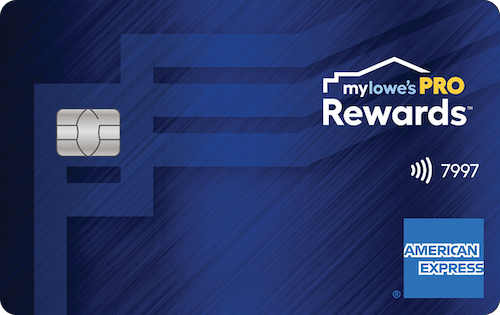
The new card will be issued by Synchrony Bank (not American Express directly), but will continue to operate on the American Express Network. The new card offers 3 points per dollar for the first six months after opening, then 2 points per dollar at restaurants, office supply stores, and mobile phone providers (again). Plus, you’ll get 5% cashback on Lowe’s purchases (with some exclusions) and an upgrade to Platinum Pro Status for Lowe’s Money. I’m no pro, and I don’t live near a Lowe’s, but this sounds complicated. If you are a pro and go to Lowe’s, I am sure it’s a good deal, though!
Better Mortgage’s Debit Card
I’ve been saying for months that the next big thing in credit cards is home equity-linked credit cards. Well, in a bit of a surprise, Better Mortgage, which originated around $4.7 billion in funded loan volume in 2025 (per SEC reports), launched a debit card for HELOCs. What is old is new again. I had a HELOC debit card from Bank of America in 2010. Fun.
My colleague Jessica Marquez led a chat about HELOC-backed cards at CardCon 2026 in April, highlighting the growing HELOC market as a key driver of these cards. With just under half of all American mortgages at rates below today’s refinancing rate, homeowners who want to access home equity are better served with a HELOC than a cash-out refinance.
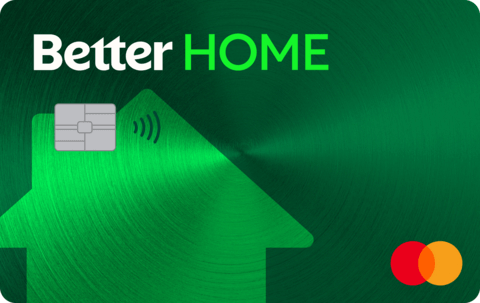
Better’s deal, however, isn’t very good. Better.com’s HELOC product requires users to fully draw their line of credit (and pay interest immediately), which makes it look more like a home equity loan than a line of credit. After the draw, the funds are deposited into a debit account, where someone earns interest (it doesn’t seem to be the homeowner). In exchange, the homeowner gets 1% cashback on their debit card.
If you’re going to take a forced-draw HELOC and don’t need the money up front, drop it into a HYSA and use a debit card from there instead.
Traditional HELOC debit cards access the LOC, so you don’t pay interest until you spend the funds, which is the right approach for a line of credit. I’ll withhold final judgment for more info; the card is expected to launch this summer. The card is issued by Cross River Bank on the Stripe Issuing platform.
Watch this newsletter for more HELOC cards. Guaranteed.
Sponsored by Lithic
Most processors connect through middlemen. Lithic connects directly to the network.

High-growth fintechs don't have time for unreliable infrastructure. Lithic delivers 99.99% uptime, high-fidelity transaction data, and direct network connections. No filtered data, no downtime excuses.
Chico’s Credit Card
Chico’s, the popular mall retailer that also owns White House Black Market and Soma, announced new co-branded and private-label credit cards, in partnership with Synchrony and Mastercard. Each chain has its own loyalty programs, Club Chico's, WHBM Prestige, and Soma My Rewards, and each card is unique. I have to give it to Chico’s: a cheetah-print card is amazing. (And, I am told, a little out of pocket for the average Chico’s customer. Which includes my mom.)
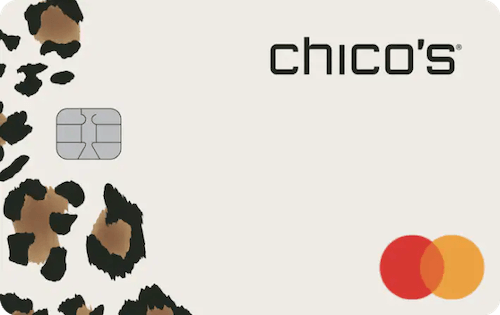
Given the simultaneous launch and the trend toward unified cards, I am surprised that these cards are so distinct by brand: you earn 7.5% (!) in rewards at the card’s brand, but it does not span across brands. Other rewards include 2% back in grocery and restaurant purchases and 1% everywhere (for the open-loop Mastercard only, of course).
Chico’s operates more than 1,000 stores and is part of a larger group that includes other mall brands like Ann Taylor, Lane Bryant, and Talbots. For fun:
- Ann Taylor: private label and Mastercard, issued by Comenity Bank / Bread Financial
- Talbots: private label and Mastercard, issued by Comenity Bank / Bread Financial
- Lane Bryant: private label only, issued by Comenity Bank / Bread Financial
I’m fascinated by the various choices here (some private-label, some open-loop, some Comenity, some Synchrony). Watch a mall near you for more.
Unknown Benefits for Visa Cardholders
Do you have a Visa card? I bet you do. Visa holds the largest share of issuing volume in the U.S. Thanks to my visit to CardCon 2026, I learned about GigSky, which offers eSIMs for Visa cardholders.
Visa Infinite Cardholders (e.g., Chase Sapphire Reserve, Atmos Summit) get a complimentary 3GB, 15-day plan in 175 countries, 7 days unlimited in “Visa Destinations” (North America during the World Cup, France, United Arab Emirates, and the United Kingdom), and a 30% discount on additional plans.
Visa Signature (probably most of your cards) gets a complimentary 1GB, 15-day plan, 3 days in Visa Destinations, and a 20% discount.
Regular Visa cards, including debit and prepaid(!), get 3 days unlimited in Visa Destinations and a 20% discount.
This is a good deal if you’re traveling!
Aven Launches a Bitcoin-Secured Credit Card
In 2015, the first iteration of my former employer, Apto Payments, launched the Shift debit card. The Shift Visa was the first card to allow you to spend crypto in the real world over the Visa rails (see CardsFTW #189 for some reminiscing). Over the years, many crypto exchanges, such as Coinbase and Uphold, have launched debit cards that allow you to spend your crypto balance directly. (Other crypto platforms direct users to sell crypto into USD and then spend from there.)
Following the rise of crypto debit cards, crypto credit cards arrived, starting with BlockFi’s launch in 2021. These cards, much like today’s Coinbase, Fold, and Gemini cards, are standard USD open-loop unsecured credit cards, which earn rewards in cryptocurrencies.
In 2018, SALT, a crypto lender, announced it would develop a crypto-secured credit card. The company launched a waitlist in July 2021. However, the card never shipped, especially following challenges for SALT with the California DFPI in 2024. Nexo, in the EU, launched its Nexo Mastercard in 2022, allowing users to borrow and spend without selling underlying crypto assets.
It appears we finally have our first crypto-secured credit card: Aven’s new Bitcoin Visa Card. Aven, founded in 2019, is known for its home-equity-backed line of credit cards. They started the trend noted above with Better.com. I don’t know if it’s new, but the “About the Company” on Crunchbase has a tell for this bigger vision:
We are reinventing consumer credit. We wildly reduce the cost of capital by using technology to easily tap into people’s assets. Our first product is the world's lowest APR credit card – backed by home equity.

I didn’t expect Aven to dive into crypto, however. The new card is really interesting:
- Credit limits up to $1,000,000
- Fixed-term plans up to 10-years for repayment
- 2% unlimited cash back
- APRs starting at 7.99%
With the card, as with their HELOC product, there are a few ways users can borrow. You can get a cash or balance transfer with a fixed repayment term of 1, 5, or 10 years. You can get an interest-only repayment up to five years (which is quite atypical for a credit card).
The quoted APRs vary based on the loan-to-value ratio of the user’s borrowing. For example, if you borrow/open a credit limit up to 30% of your total secured crypto holdings, your rate is 7.99% (starting for variable and fixed, as of writing). Up to 50% loan-to-value, the rate is 9.99%, and up to 70%, it is 11.99%.
To secure your Bitcoin, it must be transferred into BitGo (a respected crypto custodian). If crypto prices fall and you exceed your LTV ratios, then enough crypto is sold to return to the correct ratio. In addition, if you default on your card, your crypto will be sold (like all secured products).
Plus, the card looks like a very expensive metal-engraved card. (Which are all the rage these days!)
All these interesting product features aside, I am quite curious as to how the math works. I understand that Aven has scaled tremendously on its home equity side, leading to more efficient, cost-effective operations and lower capital costs. However, 7.99% is barely above the prime rate (6.75% as of writing). With all of the potential interchange income being consumed by rewards, those are some mighty tight margins.
I have long waited for a real crypto-secured card to come along, though I had assumed a crypto exchange would be the first to offer one. Coinbase, for example, offers crypto loans and a crypto credit card. Why not marry the two?
Now that it’s here, I expect others will find their way to building this, and we’ll see a competitive market. There are many long-term crypto holders who need cash from time to time, and a secured product will cost less in interest than almost any other form of lending.
CardsFTW
CardsFTW, released weekly on Wednesdays, offers insights and analysis on new credit and debit card industry products for consumers and providers. CardsFTW is authored and published by Matthew Goldman and the team at Totavi, a boutique consulting firm specializing in fintech product management & marketing. We bring real operational experience that varies from the earliest days of a startup to high-growth phases and public company leadership. Visit www.totavi.com to learn more.
Interested in reaching our audience? You can sponsor CardsFTW.