
Learnings from (Bank) Earnings - CardsFTW #201
Plus, some new cards from brands you may not be thinking about every day
New Card Roundup
Last week was a busy one with new card announcements. We have new cards from old brands and traditional issuers, as well as new fintech products:
AT&T Points Plus Revamp
The AT&T co-brand card is one of the oldest in the industry. It continues to survive and has recently been joined by other mobile phone carrier cards, such as Verizon and T-Mobile. Last week, a new upgrade was announced for the AT&T Points Plus Card.
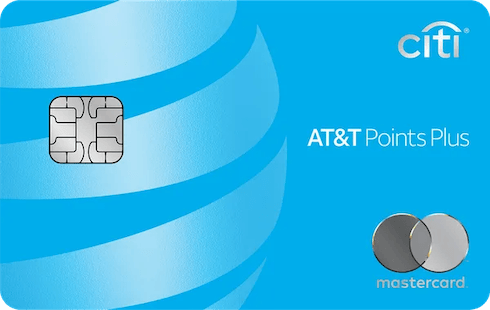
When you use the card to autopay your bill and have paperless billing, you will earn a $10 per line monthly discount and a $10 monthly discount on AT&T internet. You will earn 2x Citi ThankYou points on AT&T services. Plus, you earn a $20 monthly credit when you spend $1,000 or more (a 2% bonus) and 3x points at gas/EV chargers, 2x at grocery, and 1x everywhere else. I think this makes the AT&T card the strongest offering of the trio, with transferable points and a lot of cashback opportunities (if you use AT&T).
New Fintech Card: Vera Credit
Fintech sponsor bank, FinWise, which has been inching its way into consumer credit cards, announced it is the sponsor bank behind fintech issuer Vera Credit. Vera positions itself as available for both prime and near-prime users with a “choose your own adventure” rewards proposition:
- Omni - 2% cashback everywhere (1% at spend, 1% at pay your balance)
- Nova - 3% cashback on Apple Pay or Google Pay, 1% everywhere else
- Vita - 5% cashback on “curated categories” (travel and dining this quarter) and 1% everywhere else
The card has no annual fee and no foreign transaction fees.

The card is built on Zeta’s processing platform, which we have covered in our issuer processor report, but which you don’t see many smaller fintech companies using (you see it more at banks).
The founders of Vera are ex-Capital One, seem to have lots of capital (ha), and are moving fast, having been founded last year. The rewards structure looks expensive to manage, so I’ll be watching closely.
OnePay Builder Card
OnePay, the Walmart-majority-owned fintech, announced its new Builder Card. The card promises no credit checks and no fees. It is connected to the OnePay deposit account and provides a secured credit line based on available cash (much like Chime’s credit card product).
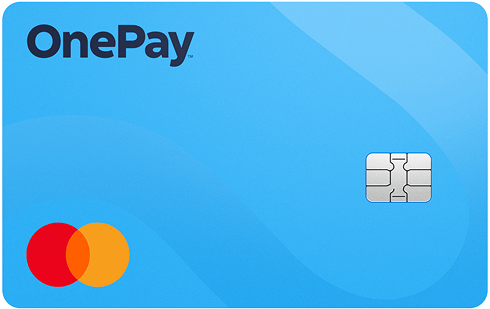
Customers make purchases based on their available Spend balance, with funds set aside automatically to cover those transactions. Payments can also be handled automatically, helping customers stay on track without the risk of missed payments. Each month, OnePay reports positive payment activity to all three major credit bureaus, supporting customers as they build their credit history over time.
Here’s the thing with cards like this: it does provide a line of credit that is reported to the bureau. It does not demonstrate that the user is actually learning how to manage their credit. Especially when the card automatically sets aside funds and makes payments for the user.
CarParts.com Mastercard!
CarParts.com (I wish it were carDparts.com) announced a new Mastercard issued by fintech issuing sponsor bank The Bank of Missouri (TBOM) and powered by Concora Credit. Concora, formerly Genesis Financial, is a non-bank subprime card issuer that has worked with TBOM before (Destiny and Milestone credit cards) and Celtic Bank (Indigo credit card). I haven’t seen them issue a co-brand card before.

The CarParts.com Mastercard aligns with the new CarParts+ membership program and includes 3% cashback on CarParts.com purchases and 1% cashback everywhere else. The program looks very vanilla, and if I were wanting to buy lots of parts and wrench away, this wouldn’t do it for me, especially given Concora's online reputation. Opportunities were also missed to include car-specific features such as rental car insurance, towing coverage, and bonuses for gas or tolls.
Learnings from Bank Earnings
It’s that time of the year (well, it actually comes every quarter) when banks report their earnings. Insights from two of the largest issuers give us some key insights we should watch.
Capital One increased its bad-loan provisions (not good) and missed estimates (also not good). This is a clear sign of the economic stress that U.S. consumers are under after years of above-target inflation, and exacerbated by the U.S. war on Iran, which has spiked gas prices. Credit loss provisions were up 72% from the prior year, indicating that Capital One expects a significant increase in losses. Not all was bad at Cap One; domestic card charge-offs improved to 5.1% (109bps improvement). (Other lower-credit issuers had improved rates as well: Synchrony improved 96bps to 5.42% and Bread 83bps to 7.33%.)
Capital One is focused on its Discover integration. Management is targeting $2.5B to $2.7B in value by 2027, of which $1.2B comes from network economics (moving debit to Discover, which is done, plus adding Discover on credit).
American Express, meanwhile, notched a big gain in expenses and a decline in airline spending. Again, there are effects of the U.S. war, with notes that airline growth is softening, although total spend was up 8% in the first quarter (likely due to increased ticket costs due to fuel costs due to the war).
Amex did see strong earnings, as it specializes in premium cards, and spending on those products continued to increase. Amex, which focuses on the top end of the market, sees a small increase in spending on gas (whereas I imagine Capital One, with many more lower-and-middle income consumers see a much higher spend on the category).
Private label and store cards are lagging general purpose: Citi explicitly called out private label declines, partially offsetting 8% branded card revenue growth. Bread's co-brand mix is now 56% of credit sales versus 42% of loans, a real shift away from pure private label. Merchant-funded value propositions are getting harder to defend against general-purpose rewards. (Although I did see Synchrony announce a new private-label Restoration Hardware card.)
CardsFTW
CardsFTW, released weekly on Wednesdays, offers insights and analysis on new credit and debit card industry products for consumers and providers. CardsFTW is authored and published by Matthew Goldman and the team at Totavi, a boutique consulting firm specializing in fintech product management & marketing. We bring real operational experience that varies from the earliest days of a startup to high-growth phases and public company leadership. Visit www.totavi.com to learn more.
Interested in reaching our audience? You can sponsor CardsFTW.