
Are Cards and Accounts the Same Thing? - CardsFTW #205
Plus, Two Big Imprint Launches and New CLOs at Bank of America
Imprint Announces Shell Mastercard and Fanatics American Express
Imprint, a six-year-old fintech startup with almost $1B in equity and debt capital, announced two large co-brand announcements this past week: Shell and Fanatics. Originally founded as a credit card co-brand provider, Imprint is branching into deposit accounts and installment loans at the same time that it moves up-market.
Imprint competes directly with both other fintech credit-card-as–service platforms like Cardless and traditional co-brand issuers like Synchrony and Bread. Imprint already issues credit cards for brands like Rakuten and Booking.com.
Last week, Imprint announced a relaunch of the Shell Performance Elite World Mastercard® and the upcoming launch of the first-ever co-brand card for Fanatics. The Shell card will be issued by First Bank & Trust, while the Fanatics American Express® Card will be issued by First Electronic Bank.
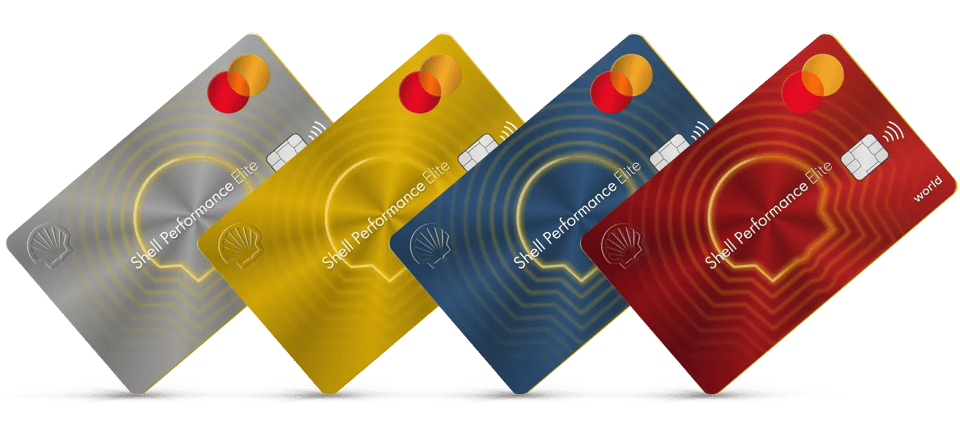
I’ve never fully understood the appeal of gas station credit cards. Yes, they offer to save you a few cents per gallon, and gas is expensive and highly price-sensitive. However, being locked into a gas station doesn’t make sense to me. I also don’t buy that anyone’s gas is better than anyone else’s! The Shell station near my house is always expensive compared to the Arco (Marathon) station down the road (by up to $0.50 per gallon). (I often take photos of the Shell price sign to shock my colleagues outside of Los Angeles.)
I’ll give the Shell card credit for broader rewards than in the past: 4% cashback at Shell, 3% on dining and groceries, and 2% on everything else. That is a very strong value proposition. Given that all purchases are at least 2% cashback, the card is likely to squeak by or lose money on pure transactions and will depend on a high number of revolvers to make it work. If you are revolving, watch out: APRs vary from 12.99% to 35.99%!
Another thing I’ll note is that the card supports cash advances, which many fintech cards don’t support, but are a good way to earn net interest margin.
Less is known about the upcoming Fanatics card, although the deal incorporates Amex beyond the card, with American Express retaining sponsorship of Fanatics Fest NYC (July 16-19, 2026). The card will earn FanCash, which is a loyalty currency you can currently earn by buying official sports merchandise from most national sports leagues (as Fanatics has locked up these deals). I hope this is friendlier than the current version; I feel like my FanCash is always expiring. More to come.
Bank of America Drops Cardlytics for Numo
Numo (originally Triple) is a card-linked offer platform spun out of PNC Bank. Card-linked offers have had a tough run: consumers love them, but they are a dud from an investment standpoint (industry pioneer Cardlytics's stock has dropped to $0.69 as of the end of last week, with a $40MM market cap).
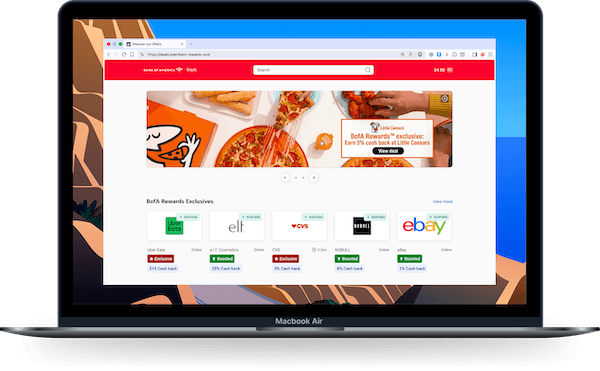
For years, BankAmeriDeals was one of Cardlytics’s premier integrations, powering card-linked offers for Bank of America’s debit and credit portfolios. Last week, Numo announced it was now powering BankAmeriDeals with a new UI, more offers, and, you know, other benefits.
I have several BofA cards, so I checked out the new experience. There are more low-value offers (1% back at Walmart?), and it looks like the RewardsNetwork dining deals have been integrated. Plus, a bunch of online shopping mall deals, which are, in my opinion, not really card-linked offers. They are just affiliate deals.
As many folks know, I use Kudos (referral link, earn $20!) to track my cards, and they auto-activate deals. Apparently, there are 5268 offers! I’ll never keep track. It’s just overwhelming. I always thought the promise of card-linked offers would be that it would be TARGETED to me. It’s clearly not.
Are Cards and Accounts the Same Thing?
I wanted to take some of my long Memorial Day weekend to write about a topic that seems obvious to consumers yet somehow turns banks into nonsensical entities: whether cards are accounts or not. (Why, yes, I AM fun to talk to at the barbecue!)
If you speak to a regular person (e.g., not someone who reads this newsletter), I think they would believe it is quite obvious that their card and their account are basically the same thing. Yet that doesn’t align with how we think about it in payments, sometimes to our detriment.
I’m going to illustrate this problem with a story. I’m not into naming and shaming, so I'll leave it to you to decide which financial institution is responsible for this, but let’s just say they pitch themselves as a modern, tech-savvy bank.
I have a checking account with this bank, which I will refer to simply as “the bank.” I don’t really use the debit card, but I do have one. A couple of months ago, I received simultaneous texts and phone calls from the bank alerting me to suspicious transactions on my card. Overnight, my debit card number had been used for a card-not-present transaction (twice) to purchase a $15.00 VPN subscription in Hong Kong.
This was not me.
I responded to both the text and the call that it wasn’t me. I was assured that the card would be replaced and that I would not have to pay for the charges. Great.
A day or two later, I received an email from the bank telling me again about the problem. I replied that I didn’t make the charges and that, yes, I did want a replacement card. Also great...
I received a new debit card with a new number. Curiously, a bit later, I also received a new debit card with the original (stolen) number. Odd.
About a month later, while reviewing the account statement, I noticed that the two $15.00 charges were still on my account. I emailed the bank via their online customer service portal to request that these be removed. By email, the bank informed me I needed to call in. So, I called the number on the back of the card. The agent told me they couldn’t help me because the problem was with the CARD, not the ACCOUNT. I would need to talk to Giant Payments Company X, which manages their debit cards. Could I be transferred? No, I had to write down a different 800 number, hang up, and make another phone call.
When I spoke to the agent at Giant Payments Company X, they had trouble finding my account (I had to try both my old and new Visa debit card numbers). Then they informed me they couldn’t see the two $15.00 charges. I needed to talk to the bank. I informed them I just had (and round and round).
I contacted the bank again and explained that their vendor wasn’t aware of these charges, yet they were still on my account. I also attempted to explain to the poor agent that, from my perspective, the card is the account. I managed to get my $30.00 back, but this was phrased to me as if the bank was simply doing me a favor.
Yikes.
Let’s look at some of the infrastructure problems:
- There appeared to be different ledgers (between cards and the account)
- Support agents (on either party) cannot see the whole picture
- The fraud review triggered multiple contacts, not at the same time, and the resolution was not tracked
- A card with the stolen number was reissued
- I had multiple open physical cards without a request
To me, though, the real issue is that the bank (or its technology team) treats the card and the account as separate.
I would argue that the Card is an access tool to the account. In today’s world, you can have lots of different cards: a physical card, a virtual card, an Apple Pay card, a Google Pay card. They may have different numbers and tokens. However, they, in and of themselves, are not accounts. The account is the account.
Some days, I think that legacy banks are making good progress. Other days are like this experience: banks have outsourced their core technology to others and don’t truly understand how it works.
The accounts vs. card argument is long-standing. When I got into the industry, we discussed prepaid cards as “not accounts” because they were not on the bank’s core, instead held in an omnibus account with external ledgers. Today, we more properly (I think) refer to those as “virtual accounts.” This simply means that the account isn’t ledgered in the bank’s core system but outside it.
A better move, seen in newer fintech management platforms, is what’s known as a sidecore, which enables the bank to run multiple core platforms side-by-side and know what is happening in each (vs. outsourcing everything to the fintech’s ledger, as in an omnibus or FBO account).
You know who doesn’t care about all this? Your users. They will use the word “account” to mean the place where their money is. If you have a deposit account, whether it has zero, one, or ten debit cards, to the user, it is all one account. Banks should treat it this way.
Inside the industry, we should all be more careful about how to talk about accounts.
CardsFTW
CardsFTW, released weekly on Wednesdays, offers insights and analysis on new credit and debit card industry products for consumers and providers. CardsFTW is authored and published by Matthew Goldman and the team at Totavi, a boutique consulting firm specializing in fintech product management & marketing. We bring real operational experience that varies from the earliest days of a startup to high-growth phases and public company leadership. Visit www.totavi.com to learn more.
Interested in reaching our audience? You can sponsor CardsFTW.