
Do Not Honor All Cards - CardsFTW #180
Plus, the 5321 card is a sign of an emerging trend
NerdCon!

Find me next week at the first-ever Fintech NerdCon Miami! I will be moderating the panel “Building B2B Payment Rails that Scale” with Wade Arnold of Moov, Brandon Lloyd of Forward, and Bo Jiang of Lithic on Wednesday at 3pm on the Main Stage. See you there!
The End of “Honor All Cards”
The new settlement announced this week between Visa, Mastercard, and a group of merchants is potentially earth-shattering, but maybe not in the ways people expect.
For decades, the card networks have had what’s known as the “honor all cards” rule. If a merchant accepts Visa, they have to accept all Visa cards and treat them the same (Mastercard has the same rule). That rule began to fracture after the Durbin Amendment, when debit and credit transactions were priced differently. Debit cards became cheaper to accept, and some merchants started saying, “We take debit, but not credit.” Still, it was simple enough. You usually knew whether your card was debit or credit.
What the Settlement Actually Does
In today’s settlement, interchange, which is the amount card issuers earn from merchants, will be reduced by about 10 basis points. More importantly, the “honor all cards” rule could go away entirely. That means you might hand over a Visa card and get rejected, even though another Visa card is accepted.
Most consumers don’t realize that Visa and Mastercard have many different product tiers. Visa has Traditional, Signature, Infinite. Mastercard has Standard, World, World Elite. Each carries different interchange rates. Those rates are published publicly thanks to earlier lawsuits—see the Visa and Mastercard (PDF) interchange tables.
You can look them up by merchant category, card type, and how the card was used: swiped, dipped, tapped, online, or manually keyed. Each combination has a different risk profile and, therefore, a different cost.
Large merchants often pay “interchange plus”: a fixed markup, say 10 basis points, over the actual interchange. Smaller merchants, like those using Square, pay a blended rate (for example, 2.9% + 35¢) and don’t see the breakdown.
Who Actually Loses Here
The knee-jerk reaction of “This must be terrible for Visa and Mastercard” misses the point. The networks don’t earn interchange. They collect network fees, a small slice in the middle, averaging roughly 18 to 22 basis points, split between fixed and variable components.
So if interchange drops by 10 basis points, it’s the issuing banks that lose that revenue, not Visa or Mastercard.
For banks, 10 basis points is a meaningful but manageable amount. They’ll adjust. Credit card economics combine lending revenue, interchange, and fees. Many cards already offer rewards that exceed interchange revenue, see Robinhood Gold or Chase Sapphire Reserve. If they lose a bit of interchange but make it up elsewhere, rewards and programs won’t change much.
The Merchant Dilemma
The more interesting question is what happens at checkout. Some merchants truly hate paying card fees and are willing to make things awkward for customers. We’ve all been there: “We don’t take Amex.” Or the opposite, “Card only, no cash.” Both create friction.
Handling cash isn’t free either. It carries risks such as employee theft and reconciliation errors, and studies estimate the total cost of cash handling to be as high as 4%.
So, will merchants start rejecting specific cards? Maybe at the margins, especially for the most expensive tiers. Visa Infinite and Mastercard World Elite are costly to accept, but they’re held by the customers most likely to spend big.
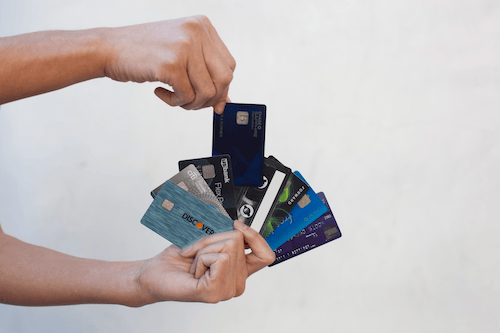
The other thing to think about here is that reading a monthly processor statement and figuring out how much you're being charged per transaction per card is practically impossible for anyone but the most data-nerdy, low-volume store. And then, you have to ask your employees to look at something like an American Airlines card and determine WHICH black-with-silver-topo not to take while a line of customers forms. It just seems unlikely.
The K-Shaped Reality
The so-called K-shaped economy tells the story: roughly half of U.S. consumer spend comes from the top 10% of earners. Those are the people holding premium cards, like the Chase Sapphire Reserve, the Atmos Summit Card, and other high end cards.
Are merchants really going to turn those people away over 10 basis points?
The interchange tables show about that much difference between card tiers. A regular Visa might be around 1.6%, Signature 1.8–2.1%, and Infinite around 2.2–2.3%. That’s the price of access to premium spenders. If someone with a $45,000 credit line and an $800 annual fee wants to shop with you, it seems like a bad time to pick a fight over fractions of a percent.
The Reality Check
Yes, some merchants will reject certain cards. Yes, it’ll create friction. No, it won’t lower prices. We saw this movie already after Durbin: lower interchange didn’t lead to lower consumer prices. The only question is where the savings go: to merchants or back to consumers in the form of rewards and reduced interest rates.
A Watershed Moment
Dropping “honor all cards” is a watershed moment for payments. It changes how card acceptance works in the U.S. and it could add real complexity at checkout. But this isn’t the end of premium cards or the beginning of mass rejection.
It’s another rebalancing act between merchants, issuers, and networks—one that will take years to fully play out.
A New Player Launches the 5321 Card
Once upon a time, the nation’s largest retailer was Sears. Then, a hedge fund manager acquired it and Kmart and proceeded to drive them both into the ground. The company today is known as Transform SR Brands, LLC (Transform Sears Roebuck) and I wasn’t aware it was still in business. It is! They still have a shopping loyalty program called “Shop Your Way.” (My way to shop is Target and Amazon, but I digress). I don’t think Shop Your Way has much to do with Sears anymore, but is a multi-retailer loyalty system with affiliate links and from which, ironically, you can redeem points for an Amazon Gift Card.
Also, there was a Shop Your Way Mastercard, issued by Citibank. As of November 3rd, that deal ended. Cardholders were automatically transferred to a standard Citi ThankYou Mastercard. Coming soon is a new Shop Your Visa with 5% cashback on gas, charging, tolls, car washes, transit and rideshare, 3% back for dining, groceries and travel, and I don’t know what the 2% is, but I’m going to assume it’s there.
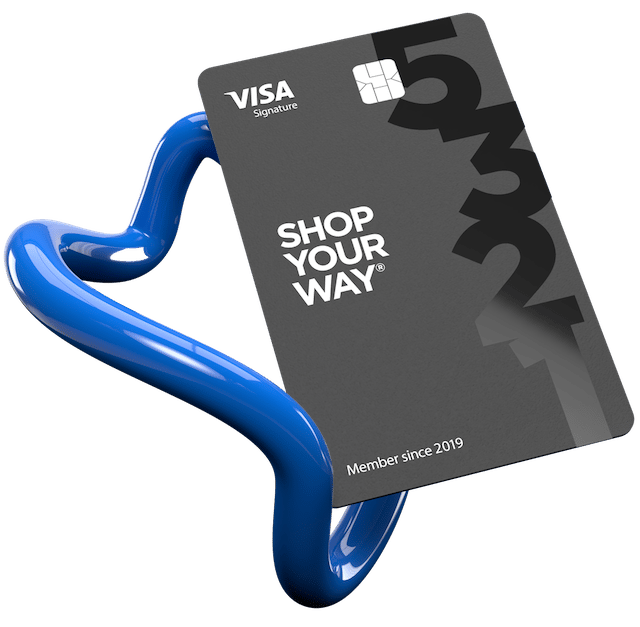
Anyway, what’s interesting here is the partner: Fidem Financial. The new 5321 Visa Credit Card will be issued by First Bank & Trust of Brookings, SD, which is a sponsor bank of credit products. The program will be managed by Fidem. I’ve spent a lot of time in this newsletter talking about next-generation card program managers that are venture-backed technology companies (such as Imprint or Cardless). Fidem, on the other hand is a credit fund that has been known for acquiring receivables from programs. As far as I know, this is their first big co-brand that they are managing directly and bringing all of the technology to. Fidem is the investment management arm of Onboard Partners, which has expanded from advisory services into full co-brand servicing.
Whether a brand selects to work with a Cardless or Imprint, or Fidem/OnBoard, they are selecting not to work with a traditional bank. These new partners offer capital and technology via the access of private credit, with accelerated timelines compared to traditional bank issuers. We can expect to see more of this in the coming years.
Samsung Wants a Bite at the Wallet Apple
Samsung loves to copy Apple. There are a bunch of lawsuits on this topic. Now, The Wall Street Journal is reporting that Samsung will partner with Barclaycard to issue a Samsung Credit Card in the U.S. As a result, Barclaycard will be out of the running (if they were truly in it) to take over the Apple Card from Goldman Sachs. Samsung is reportedly also exploring a savings account (like Apple), a prepaid account (like Apple) and a BNPL product (like Apple). Apple has shown that integrating financial services into your phone’s digital wallet is a tremendous opportunity and Samsung Pay lags behind Apple and Google.
The Best Way to Buy Now and Pay Later is Still a Credit Card
I have written ad nauseum about how BNPL was a short-term stepping stone back to credit cards. Now Affirm itself says that “The (Affirm) card is the best way to use Affirm.” (Affirm’s COO, Michael Linford was quoted in The Wall Street Journal). OK, what is BNPL at this point? More clear interest? It’s all sort of the same.
T-Mobile Visa
I wrote previously (CardsFTW 70) about how T-Mobile stopped allowing you a discount on autopay (which is $5 per line) with a credit card, even though the cost of acceptance of a credit card is probably like $1.20 per line. You could trick the system by signing up for autopay with a debit card, and then paying early with a credit card. Also, you could pay with an Apple Card and earn 3% cash back.
The 3% cashback bonus for Apple Card users on T-Mobile spend went away a few months ago (reverting to 2% cashback with Apple Pay or 1% via a swipe or manual entry). The "have your autopay set to debit card to get the discount" hack disappeared a few weeks ago.
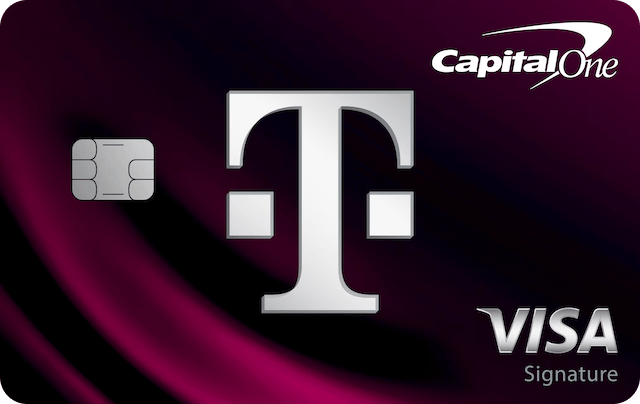
Now we know why T-Mobile has been removing these options for earning rewards: to drive adoption of their own credit card product, the all-new T-Mobile Visa card. The card offers 2% cashback everywhere, plus 5% at T-Mobile. It’s not all it seems, though.
From the fine print:
T-Mobile Visa cardholders earn 5% back in T-Mobile Rewards on net Qualifying Purchases (purchases minus any credits or returns) made online at T-Mobile.com and in the T-Life app, and at T-Mobile stores and Authorized Retailers (https://www.t-mobile.com/stores.locator). Qualifying Purchases include phones, devices, and accessories. Cash advances and balance transfers are not considered purchases and will not earn T-Mobile Rewards. Qualifying Purchases exclude payments for device equipment installment plan (EIP), wireless service, prepaid wireless service, T-Mobile for Business, and other services. You may not accrue enhanced earnings on purchases made using 3rd party digital wallets.
OK, so you cannot earn 5% back on T-Mobile wireless service on your T-Mobile card. Come on.
Does anyone remember the whole “uncarrier” business? The message was "Cell phone companies are utility players, like cable TV, that try to screw you. T-Mobile won’t." Well, it turns out they will and they are just another carrier. While this is disclosed, this is pretty close to deceptive in my view. The main thing T-Mobile sells is wireless service, but that is excluded from the accelerated earnings category. Give me a break.
Edward Jones Card Suite Launches
Finally, in a news-packed week, US Bank and wealth management firm Edward Jones launched a suite of three credit cards this week:
- The Triple Rewards World Elite Mastercard
- The Flex Balance Mastercard
- The Business World Elite Mastercard
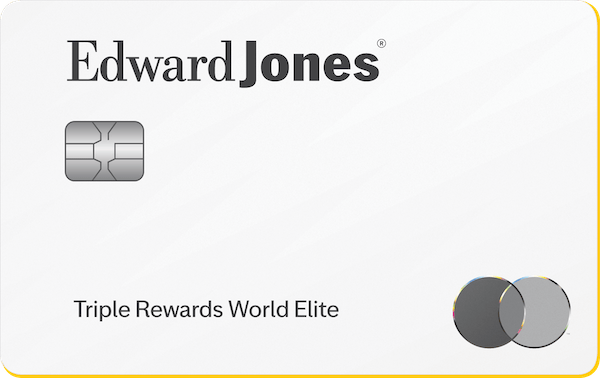
The Triple Rewards card earns 3 points per dollar in your top three categories, which is a nice way to earn a lot. The business card is a flat 2 points per dollar card and the flex balance is for folks who need to borrow money. Not sure about that last one; if you’re with Edward Jones are you running a balance? Points are worth 1 cent each. You must be an Edwards Jones customer to apply.
Not super interesting, but if you’re stuck on the Robinhood Gold Card waitlist, this is an option.
CardsFTW
CardsFTW, released weekly on Wednesdays, offers insights and analysis on new credit and debit card industry products for consumers and providers. CardsFTW is authored and published by Matthew Goldman and the team at Totavi, a boutique consulting firm specializing in fintech product management & marketing. We bring real operational experience that varies from the earliest days of a startup to high-growth phases and public company leadership. Visit www.totavi.com to learn more.
Interested in reaching our audience? You can sponsor CardsFTW.