
Retention vs. Acquisition - CardsFTW #183
Plus, Deals on Socks, Predictions for 2026 and more
The Best Gift for Fintech Friends: Goldman Socks

As we head into the holiday season, it’s worth remembering the greatest gift you can give your card-and-fintech-loving friends: Goldman Socks. We now offer five different varieties, including the CardsFTW logo style and our famous BaaS Socks. As a special end-of-year treat, all socks are 40% off through December. Make sure to order soon if you want them to arrive in time for the holidays. Use code "SOCKSFTW40" to save at goldmansocks.co.
Totavi’s 2025 Recap & 2026 Predictions Report
This year, we’re trying something new at Totavi: We produced a comprehensive 2025 year-in-review paired with forward-looking predictions for 2026. The report reflects extensive research into the trends that shaped the past year, such as the advancement of crypto-linked cards, and examines areas we expect to grow next year, including the emergence of more HELOC-based card products. The report is now available for free in the Totavi app.
Acquisition vs. Retention
As explored through the lens of the Bank of America’s FIFA 2026 Card Design
Bank of America has released a limited-edition design for the Customized Cash Rewards card and several other products to celebrate its (and Visa's) partnership with the 2026 FIFA World Cup. The card keeps the classic Bank of America red but adds what looks like an exploding FIFA trophy globe. It’s not a bad design, just a little strange.
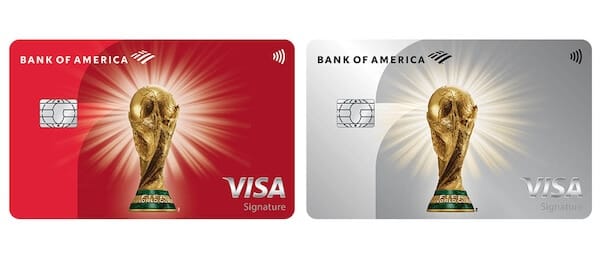
What makes the card more interesting is that new applicants who open this Cash Rewards card can purchase up to two tickets to select matches. FIFA tickets are famously difficult to secure, which makes this a compelling acquisition offer. As someone who has carried this card (or some prior version of it) for about twenty years, it’s disappointing that existing cardholders don’t appear to be eligible for the benefit. That disappointment raises a broader point about how banks balance cardholder acquisition and retention.
In many institutions, the acquisition and retention teams operate somewhat independently, and the incentives reflect that structure. Long-time customers can end up feeling left out of the best offers, despite years of loyalty. Discover is one of the few issuers that consistently runs re-engagement campaigns for dormant users, and I’ve always appreciated receiving prompts like “Earn $20 when you spend $500 next month.” These offers are simple and effective at pulling the card back into my rotation.
Given how many experiential assets banks have—American Express with special lines and event access, Visa with stadium benefits, and SoFi Stadium’s dedicated cardholder entrance—it would make sense for more issuers to extend major-event benefits to existing users as well. If you’re going to invest in a high-visibility event like the World Cup, that feels like an opportunity to reward long-time customers alongside new ones. Football games, bowl games, and other sponsored events are all places where banks could strengthen engagement rather than relying solely on upfront acquisition bonuses.
Acquiring new users is expensive from a marketing cost standpoint (advertising, plus sign-up offers), operating standpoint (running a credit check, issuing a plastic) and risky (how do you know the applicant is who they say they are? will they pay their bills?). You can't focus on only one side of the balance without the other. Card issuers must do both parts. I'd like to see more on the retention side from mass market cards.
Bilt + United + Chase: A Surprising Collaboration
Bilt announced that United MileagePlus cardholders who pay rent through Bilt using a Chase-issued United card can now earn double miles. This development is unexpected because Bilt has traditionally been a competing card program (via Wells Fargo) rather than a partner of Chase, and United has been tightly aligned with Chase for years.
It’s especially intriguing given that Bilt’s own credit card is currently frozen as they transition from Wells Fargo to Cardless, with new applications not reopening until January. Seeing these ecosystems cross-pollinate signals a period of experimentation in loyalty models that could reshape how co-brand programs collaborate.
From the Bilt website on how this works:
It’s seamless: pay rent through Bilt with a participating United MileagePlus Chase Card, and get 2 total miles per dollar. One mile per dollar posts to your MileagePlus account under "Bilt Rent Cardmember Bonus Miles," while the other mile appears on your credit card statement in the "United MileagePlus Award Miles Summary." Two deposits, double the satisfaction.
What this sounds like to me is: Bilt is still a 1x category on your MileagePlus account (and I think you have to pay a convenience fee/surcharge to pay by credit in the Bilt portal). AND, Bilt will issue you a United Mile directly to your United account instead of a Bilt point. Previously, you earned Bilt points, and I think you could simply transfer them. Still an interesting setup of multiplier earning capabilities.
Brex and Fifth Third Deepen Their Partnership
Fifth Third has selected Brex to power a commercial card offering directly for the bank’s commercial customers, building on its long involvement in embedded finance. This is a significant development because it gives a fintech card platform direct access to a major bank’s customer base, likely driving billions of dollars in commercial card volume onto Fifth Third’s platform. It also highlights the increasing pressure that traditional banks, especially community and regional institutions, face from more modern spend-management competitors like Brex, Ramp, Flex, and Pipe.
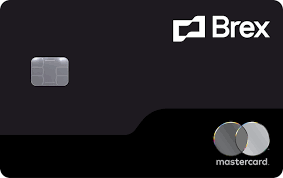
Historically, many banks have viewed SMB cards as a secondary product, focusing instead on lending relationships. But once a business begins relying on a fintech’s card product and platform, it becomes easier for that fintech to offer credit as well, shifting revenue away from the bank. While I don’t expect Brex to roll out dozens of similar partnerships across smaller banks, community banks should watch this move closely and consider what they can do to keep their business customers within their own ecosystems. I’m particularly curious to see how the Fifth Third–Brex card compares to Brex’s existing commercial product once the full details emerge.
Errata
A couple of quick corrections from last week’s newsletter.
First, due to an editing error, we referred to Tallied, the credit card program management platform, as “Tally.” The correct name is Tallied—T-A-L-L-I-E-D—and the website version of the newsletter has already been updated.
Second, readers pointed out that the Robinhood Credit Card not only earns 3% cashback when rewards are deposited into a Robinhood investment account, but also offers that same effective rate when redeeming rewards for gift cards through the Gift Card Mall. This is a welcome surprise, since gift card redemptions are often less valuable. It’s nice to see Robinhood delivering a competitive redemption option here.
Third, I asked about Robinhood skipping the hard credit inquiry. A few readers pointed out that Robinhood can simply underwrite without a hard inquiry using their own data (e.g., cash flow data, asset data, etc.) True. Robinhood is reporting accounts: My first statement closed and appeared on traditional reports.
CardsFTW
CardsFTW, released weekly on Wednesdays, offers insights and analysis on new credit and debit card industry products for consumers and providers. CardsFTW is authored and published by Matthew Goldman and the team at Totavi, a boutique consulting firm specializing in fintech product management & marketing. We bring real operational experience that varies from the earliest days of a startup to high-growth phases and public company leadership. Visit www.totavi.com to learn more.
Interested in reaching our audience? You can sponsor CardsFTW.