
Celebrating 50 Years of ECOA - CardsFTW #128
Plus, Our Data Aggregator Market Analysis Launches, Kudos' Perk Tracker, and More
Totavi's Latest Market Report is Available Today

One of my goals when I started Totavi was to create leading market research from an operator's perspective that would help others build and refine their fintech products. Today, I’m excited to announce the launch of our latest report, featuring data aggregators such as Plaid, Finicity, MX, Teller, Yodlee, and others.
One of the most common questions people ask us is about how to acquire financial transaction data. (To be honest, it’s usually phrased as, "So, should I just use Plaid?") In this report, we will give you all the information you need to make an informed decision as you build your product.
Along with this new report, we are also updating our pricing structure to make our research more accessible and sustainable. Going forward, each report will now be $500, or you can subscribe to all current and future reports for $795 each year, giving you immediate access to our library and new reports as they are released.
Not seeing a discount? Subscribe to CardsFTW today.
Fifty Years of the Equal Credit Opportunity Act

On October 28, 1974, the Equal Credit Opportunity Act (15 U.S.C. § 1691) was enacted, prohibiting creditors from discriminating based on race, color, religion, national origin, sex, marital status, age (for those of legal age), use of public assistance programs, or previous good-faith exercise of any rights under the Consumer Credit Protection Act.
It’s hard to imagine today, but 50 years ago, women and minorities were often denied access to credit, the opportunity to build their credit history, or receive a fair assessment of their creditworthiness. Before the ECOA, lenders could deny credit for arbitrary or discriminatory reasons. Factors like race, gender, or marital status often determined whether someone was approved for a credit card or loan, with decisions based on personal characteristics rather than financial ability or credit history.
The ECOA changed that. It made it illegal for creditors to base decisions on characteristics that have no bearing on your ability to repay, ensuring that creditworthiness is judged by financial responsibility, not by who you are. Thanks to the ECOA, lenders were required to take a more objective approach to evaluating credit applications. No longer could they rely on bias. Instead, they had to focus on factors like income, credit history, and employment. This law laid the foundation for the data-driven credit scoring systems we use today, systems that have brought more fairness and consistency to lending decisions.
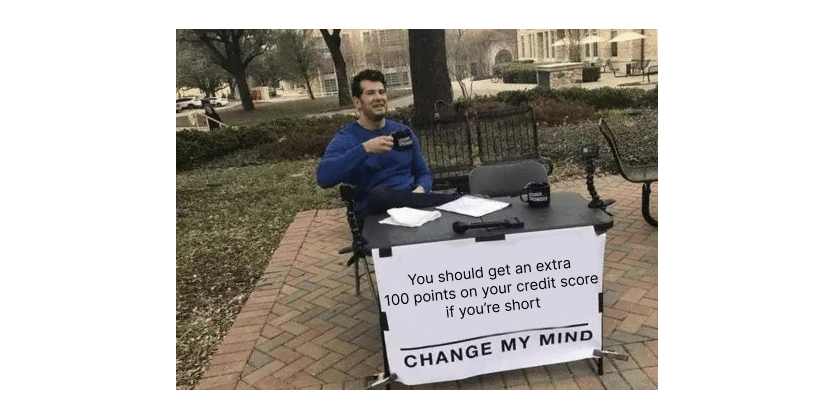
While the ECOA was a critical step forward, the system it helped create is not without its challenges. For instance, traditional FICO scores still don’t account for rent payments or utility bills, factors that can be significant indicators of a person’s ability to repay loans. I’ve been in fintech for almost 20 years, and throughout that time, entrepreneurs have been trying, unsuccessfully so far, to bring rent and utility payments into the credit system. It continues to frustrate me how large companies manage credit unfairly. They penalize users for missed payments but don’t reward responsible behavior. Take cell phone carriers, for example. They judge post-paid users by credit score, reporting negative behavior for missed payments, but rarely report positive behavior when payments are made on time.
Modern credit scoring systems have come a long way since the days of subjective lending, but significant challenges remain. While the ECOA prohibited discrimination based on personal characteristics, it didn’t fix all the systemic issues. Many people still struggle with low credit scores, as the system heavily relies on traditional forms of credit like credit cards and loans, which are not accessible to everyone. Factors like redlining, systemic racism, and cultural biases mean that credit scores don’t always accurately reflect financial responsibility for many people.
Fortunately, more companies are recognizing these gaps and working to address them. Newer credit scoring models, such as FICO’s UltraFICO and Experian Boost, are considering other financial behaviors, like managing bank accounts or paying utilities. This is a much-needed step toward a more holistic view of financial responsibility, but it also shows that we’re still working to create a truly fair system for all.
Other companies, like Prism Data, are innovating around cash-flow-based underwriting, which leaves out many of the traditional credit scoring factors to look at the current data on how an individual manages their credit. I remain undecided on cash-flow underwriting as it is not yet proven over the longer-term economic cycle, but I applaud the innovations designed to make access to credit more fair and equitable.
We still have challenges to address. Certain groups, especially minorities and women, continue to be disproportionately affected by lower credit scores, often due to factors like wage gaps or limited access to traditional banking services. While the ECOA laid the groundwork for fairness, achieving true equality in the credit system is still a work in progress.
Many aspiring entrepreneurs struggle with the legal and regulatory limitations of the U.S. credit system. A common refrain is to tell people who want to try new credit scoring tactics is to go to another country. For example, companies operating in certain places may be able to assess your creditworthiness based on the apps on your phone, or who your associates are on social media or with whom you text. An argument goes that if credit-worthy people associate with other credit-worthy people (and the inverse). Being judged by the company you keep does not seem appropriate to me, especially in a world where a health scare or job loss can cause someone to be unable to keep up with their obligations. A U.S. without ECOA would be easier to innovate in (fewer regulations and all), but it would be fundamentally discriminatory. That’s not a price I think people should have to pay.
The path forward requires continued progress. We need to build on the ECOA’s foundation by advocating for credit scoring systems that reflect a person’s true financial responsibility. This means promoting models that consider non-traditional forms of credit, supporting fintech innovation, and raising awareness of the importance of equal credit opportunities for everyone.
The credit system still has room for improvement, but the Equal Credit Opportunity Act set us on the right path. It reminds us that prioritizing fairness can lead to meaningful change. While there’s still work to be done, the ECOA laid a foundation for a system that better reflects people’s financial responsibility, and we need to continue building on that progress.
Kudos’ New Perk Tracker

Smart wallet provider Kudos* announced a new feature called Hidden Perks. We often discuss the various add-on perks of cards, including a deep dive into streaming deals in CardsFTW #214. It’s a lot to keep track of, especially if you have a ridiculously large number of credit cards (who, me?). I love this feature and many other recent product updates from Kudos. If you haven’t signed up yet, visit joinkudos.com and use code "MATTHEW_GOLDMAN_12617" to earn a $20 bonus!
Marriott Points to Starbucks?
The Starbucks Loyalty program's integrations with various credit cards (like Bank of America) and loyalty programs (such as Delta) are frequent topics on CardsFTW.
In the lead-up to “Marriott Week” at Starbucks, where just three visits earns you 100 Bonvoy Points, Starbucks announced that you could, if you are not thinking, transfer 1,000 Marriott cards into 100 Starbucks points, which gets you a … drip coffee. That’s right, it won’t even get you something fancy like a latte or cold brew (fancy-people iced coffee).
This is a terrible deal. Let’s do some math. Marriott points are worth around 0.6 cents each, meaning 1,000 points are worth about $6. But those 100 Starbucks points you get in exchange are worth only about $2 (drip coffee), leaving you $4 short in value. Plus, Marriott points can be redeemed for much better rewards, like hotel stays or room upgrades. Please, don’t do this.
Me, Elsewhere
I don’t just think about credit cards all day. Sometimes, I think about other fun topics, like WealthTech. If you’re curious, check out my article Is WealthTech the New FinTech over at This Week in Fintech, where I explore whether WealthTech is the next big thing. I heard all the fintech nerds are debating the taxonomy of "wealthtech" now. You're welcome.
CardsFTW
CardsFTW, released weekly on Wednesdays, offers insights and analysis on new credit and debit card industry products for consumers and providers. CardsFTW is authored and published by Matthew Goldman and the team at Totavi, a boutique consulting firm specializing in fintech product management & marketing. We bring real operational experience that varies from the earliest days of a startup to high-growth phases and public company leadership. Visit www.totavi.com to learn more.
Interested in reaching our audience? You can sponsor CardsFTW.
*Indicates a company with which Totavi has a financial relationship.