
Gen Z Doesn't Like Credit Cards - CardsFTW #127
Plus, we’re taking back what we said about the news slowing down…
Money20/20
Totavi is going to Money20/20, and we’d love to meet up! If you want to connect, fill out this quick form. We’re also organizing a directory of all the events happening around the conference, so be sure to check it out here; we already have over 50 events listed and are adding more every day! If you’re hosting something, you can add your event using this form.
We can’t wait to see you there!
Gen Z Doesn’t Like Credit Cards
Today’s lead post is by Julia Nicholls, Associate Consultant here at Totavi. I asked Julia to reflect on the statistics and commentary on card usage by younger adults. Enjoy!
As the token Gen Zer here at Totavi, I thought it would be interesting to share some thoughts about my generation’s spending habits. In CardsFTW #104, I spoke a little bit about my history with credit cards and when I first discovered how they really worked. Honestly, I am still learning all of the intricacies of different programs, but I’m pretty confident in saying that I know a bit more than the average person my age.
Something that surprised me when I was doing research for my last post is that 65% of Gen Z consumers prefer using a debit card over a credit card.¹ I may be a bit biased in saying this, but I feel like Gen Z (given how tech-savvy as we are) would be great at taking full advantage of credit cards and their rewards - so why aren’t we?
Spending Habits
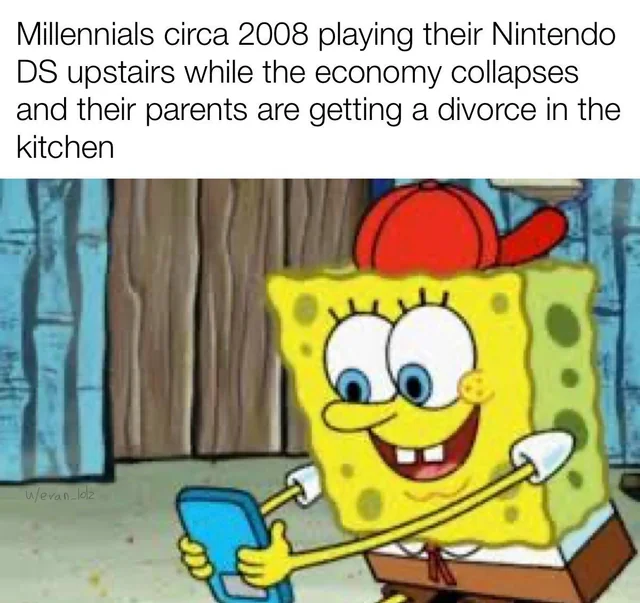
The largest trend in Gen Z’s spending habits is their aversion to accumulating credit card debt. Having witnessed the financial struggles of the previous generations and having lived through two financial recessions, Gen Z is determined not to have to go through what their parents did. Gen Z has learned not to rely on borrowed money and is determined not to spend more than what they have. For 65% of Gen Z, this means using a debit card rather than a credit card. For others, BNPL has become increasingly popular so as not to over-index their budget for the month. Personally, I used to be a big proponent of BNPL, especially when I was working hospitality jobs and didn’t make enough to balance my college lifestyle. Now, I have credit cards, but I pay them off in full each month and am careful not to overspend - I would rather dip into my savings account than carry over a balance. As the rest of Gen Z continues to age up and enter the workforce (and be old enough to get a credit card), it will be interesting to see how rewards programs change to accommodate the loss in interest fees each month - or perhaps I am being too optimistic in my belief in Gen Z not falling into debt.
There is also the matter of convenience. Gen Z prefers cashless and contactless payments and does a lot of shopping online—32% of Gen Z say they shop online daily (compared to the Millenials at 25%).² Being so adept with technology, a seamless, personalized experience has become the expectation for us. With this comes the expectation of a digital-first banking solution.
How Financial Institutions are Adapting
While most of Gen Z initially banked at traditional banks, many have begun to move away. Whether it’s because they began banking where their parents did and now they are on their own or because of the rapidly improving fintech options that are becoming available, there is an opportunity to capture Gen Z’s loyalty through offering convenient, fully digital solutions. There is something remarkable about the hold word-of-mouth marketing has on us; there have been products I bought immediately because of my friends, and there have been entire brands I have avoided because they were outed online for being unethical or because I can find the same product somewhere else for half the price. Fintech apps are no different. With so many discussions around financial literacy, building savings, and investing, neobanks have a great opportunity to take the loyalty of Gen Z and use it to their advantage. Fintechs like Chime and Revolut are already gaining popularity, and companies that are willing to offer wealth management or high-yield savings accounts will have a plethora of interested customers.
Gen Z Buying Power
It’s hard for me to write about my generation without either getting overly excited or saying to myself, “Who even cares about us and our trends?” I feel pretentious writing about how Gen Z is so different from everyone else and has all these unique experiences - but they don’t feel unique because everyone else lived them, too. Like, why did the 2008 financial crisis affect us and our mentality around money so differently from our parents, who were actually participating in the economy? Regardless, I suppose it’s important to understand the trends of each new generation entering the world, as we will one day have to do with Gen Alpha.
Gen Z already makes up 40% of global consumers, even though the majority of us aren’t even 18 yet (meaning most don’t have proper jobs). This doesn’t even account for the purchases made by parents whose choices were influenced by their children. With so much power around what the new trends are, what brands will be supported, and how we decide to bank our money moving forward, it’s no surprise that companies are already researching how they will be able to win us over in the global market, and creating resources focusing purely on how to capture the favor of Gen Z.
I honestly don’t have an answer for why Gen Z doesn’t use credit cards as much as other generations - perhaps it’s as simple as we aren’t yet old enough. Since most of Gen Z isn’t 18 yet, obviously, they wouldn’t be able to use a credit card - but wouldn’t a question of preference assume that people would be old enough to use a credit card? Please drop your thoughts in the comments, I would love to hear what you think!
Quick Hits:
SoFi launched two new cards: the Everyday Cash Rewards credit card and the SoFi Essential credit card. The Essential card is a credit builder open by invitation only, while the Everyday Cash Rewards card earns 3% cashback rewards on dining; 2% on grocery stores; and 1% on all other eligible purchases. The cards aren’t anything particularly innovative, but demonstrate SoFi’s continued transition into a full-fledged credit issuer.
Canadian direct-to-consumer neobank turned infrastructure platform Neo Financial announced a partnership with CI Financial to expand their financial solutions for wealth clients. The new credit cards are designed to supplement CI's wealth management offering.
Navy Federal Credit Union launched a new credit card with 2% cash back and a design that looks like the folks at Citibank made it. Or maybe the people at Capital One. What’s with the circles, folks? Am I right?
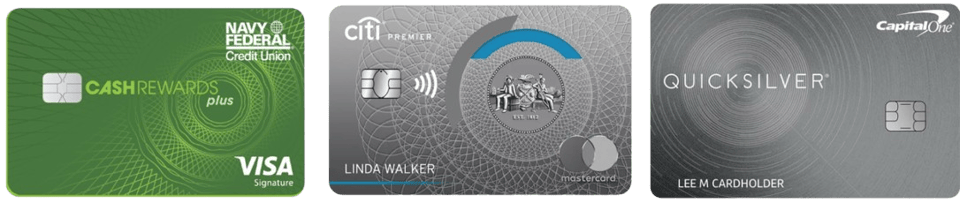
2% cashback is strong and as a credit union this card carries a wonderful 16.9 - 18% APR (compared to average card interest rates of 24%+, as we noted in last week’s CardsFTW). The card has no fee which makes it a strong competitor to the Citibank Double Cash card, although you do have to have a NFCU membership. The card even includes a signup bonus, rare in the 2% category.
As long rumored, General Motors and Barclays announced that Barclays will be taking over the GM Card portfolio from Goldman Sachs. The General Motors/Goldman Sachs partnership was brief–I’ve been publishing this newsletter for longer. My original impressions weren’t very good in CardsFTW #44. Whatever GM and Barclays do, I hope it is better. That said, I think that brand-specific credit cards in auto don’t really make sense. There are better ways to do this.
CardsFTW
CardsFTW, released weekly on Wednesdays, offers insights and analysis on new credit and debit card industry products for consumers and providers. CardsFTW is authored and published by Matthew Goldman and the team at Totavi, a boutique consulting firm specializing in fintech product management & marketing. We bring real operational experience that varies from the earliest days of a startup to high-growth phases and public company leadership. Visit www.totavi.com to learn more.
Interested in reaching our audience? You can sponsor CardsFTW.
*Indicates a company with which Totavi has a financial relationship.
1. Elkins, S. (2024, September 16). Gen Z and the Future of Payments: Cards, Cash, and the Shift to Digital. Swipesum. Retrieved October 14, 2024↩︎
2. Babcock, S. (n.d.). 32% of Gen Z consumers shop online daily. The Current. Retrieved October 14, 2024↩︎