
Card-Linked Offers: How They Work, Who Pays, and Why They Exist - CardsFTW #141
Plus, a new JetBlue Card
The other day, I found myself in a conversation trying to explain how card-linked offers (CLOs) actually work: who pays for what, how the incentives flow, and why every implementation seems to be slightly different. Even though I’ve been in the payments space for a while (including running CLOs at Green Dot back in the day), it was clear that these programs still feel like a black box to many people.
The truth is that CLOs have been around for years, and while the concept is simple, the execution is anything but. If you’ve ever activated a cashback deal in your banking app, been surprised by an automatic statement credit after shopping somewhere, or tried to figure out which of your cards has the best deal at a particular store—congrats! You’ve encountered card-linked offers.
So, let’s break this down.
What Are Card-Linked Offers?
At its core, a card-linked offer (CLO) is a digital coupon that applies automatically when you make a qualifying purchase with an enrolled payment card. Unlike traditional coupons or promo codes that require manual entry, CLOs work in the background using your transaction data. They’re often equated with merchant-funded offers (MFOs), but not all CLOs are merchant-funded.
The funding source can vary:
- Merchant-funded: The retailer foots the bill (e.g., “Spend $50 at Nordstrom and get $10 back”).
- Issuer-funded: The bank or card issuer covers the cost (e.g., a signup bonus that gives you cashback for hitting a spend threshold).
- Network-funded: The payment network (Visa, Mastercard, or Amex) offers deals as part of a broader incentive program.
The key point? CLOs are tied directly to card transactions, which means no coupon codes, scanning, or user error (well, usually).
How Card-Linked Offers Started
The first card-linked offers weren’t nearly as sophisticated as today’s versions. Back in 2006, Green Dot ran early CLOs that were pretty simple:
- Buy a Green Dot card at CVS in January.
- Return to CVS in February and spend at least $10.
- Get a $10 credit.
The “tech” behind it? A SQL query run by our database administrator.
The original card-linked offers are from RewardsNetwork, a 40-year-old company that powers dining for miles programs for companies like United Airlines, Southwest Airlines, and Marriott Hotels. You can earn 1 to 3 miles per dollar spent at more than 100,000 participating restaurants across the US.
Tech companies entered the space with companies like Cardlytics and Offermatic.
Offermatic (2010), one of the first attempts at direct-to-consumer offers. They used Yodlee (before Plaid was a thing) to scan transactions and offer deals like “Spend $30 at Chevron, get $5 back.” The problem? They didn’t have all of the deals with Chevron and other merchants—they were using investor dollars to fund a lot of initial rewards. Unsurprisingly, they burned through their cash and folded. In addition, it was probably too early: very few consumers were used to linking their cards to an app in those days.
Earlier, Cardlytics was founded by ex-Capital One folks (in 2008) with a different idea: banks should run these offers inside their apps. Their pitch? Scan transaction data to personalize offers based on where customers already shop. Sounds great, right? Except even today, banks still struggle with making these offers truly personalized.
One fun fact: Cardlytics was built in a way that banks wouldn’t have to share raw transaction data externally. Instead, banks bought servers from Cardlytics and physically installed them in their own data centers. Definitely a pre-APIs-rule-the-world era.
Why Banks and Merchants Like (and Hate) Card-Linked Offers
From the bank’s perspective, CLOs aren’t a huge revenue driver. In fact, a former senior executive at a top-five bank once told me, “The revenue doesn’t matter. We make $120 billion a year in revenue. Do you know how much Cardlytics pays us? Millions. We don’t care.”
So why run CLOs at all?
Because it gets people to log in to their banking app.
And banks really want that. The more people log in, the more likely they are to apply for a loan, open a savings account, or buy some other product. The actual offer performance is secondary.
Merchants, on the other hand, love that CLOs eliminate promo code abuse. With traditional online promo codes, once a deal leaks, anyone can use it. CLOs prevent that—only the enrolled cardholder gets the discount, and they can’t share it. But merchants also hate that these programs can be expensive, offer little control over who redeems the offer, and don’t always drive incremental spending.
How Do Card-Linked Offers Actually Work?
Here’s a simple breakdown:
- A merchant funds an offer – “Spend $100 at Dick’s Sporting Goods, get $10 back.”
- A CLO provider (like Cardlytics, Figg, or Fidel) hosts the offer: They run the platform that banks or card programs use.
- The customer activates the offer: Some offers require activation (like Chase Offers); others work automatically.
- The cardholder makes a qualifying purchase: The transaction data is sent to the CLO provider.
- The merchant is billed for the incentive and fees, usually once a month, based on actual redemptions.
- The reward is credited back to the cardholder, either as cashback, points, or another type of incentive.
This process happens whether the CLO is run through a third-party platform (like Figg or Fidel) or directly through a payment network (like Visa or Mastercard Offers). The mechanics are similar; the main difference is who owns the relationships and data.
The Business Model: Who Pays for What?
CLOs are all about incentives and revenue-sharing. Here’s how the money flows:
- Merchants pay a discount (e.g., 10% back) to be part of the program.
- The CLO provider (Cardlytics, Figg, etc.) takes a cut.
- The card issuer (or bank) also takes a cut.
- The remaining amount is passed to the cardholder as cashback or points.
For example, if a merchant funds a 10% discount and the CLO provider takes 5%, the remaining 5% goes to the customer as a reward.
Some CLO platforms charge flat fees to card programs, while others work purely on a revenue-sharing model. It depends on the provider.
Why This Matters for Card Programs
For brands launching card programs, CLOs offer a way to provide extra value to customers while also generating revenue. Instead of negotiating one-off deals with merchants, they can tap into existing networks like Mastercard Offers or Triple.
But there are trade-offs:
- Direct deals = more control and better economics.
- Third-party networks = less effort but smaller margins.
For some programs, this could be huge. Partnering with a platform like Triple or running direct merchant-funded offers could drive engagement and spending at, say, golf retailers while creating an additional revenue stream.
Final Thoughts: Are Card-Linked Offers Worth It?
CLOs have been around for almost 20 years, and while the tech has evolved, the core idea hasn’t changed. They’re a great tool for:
- Driving customer engagement
- Generating ancillary revenue
- Offering discounts without promo code abuse
But they also come with challenges:
- Merchant participation is limited
- Offers aren’t always personalized effectively
- Some implementations are clunky for consumers
Still, when done right, CLOs can be a valuable piece of a rewards strategy.
Also—if you’re not signed up for a Dining for Miles program, you’re leaving free money on the table. Just saying.
Barclay’s New Premium JetBlue Card
I’m often asked: "How many credit cards do you have?" Including business cards, it’s about 30 (I stopped counting). I think I might be considering a new one: the new JetBlue Premier World Elite Mastercard®. (I flew JetBlue on several cross-country flights last year and it's my current favorite long-haul airline.)
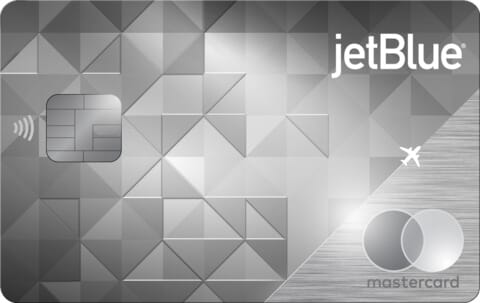
Barclays has an under-appreciated US portfolio. I have a Hawaiian Airlines card from when I thought I would go to Hawaii before the pandemic and it has served me well. This good-looking new ultra-premium card clocks in at $495 per year, but has a very high signup bonus of 70,000 TrueBlue points and 5 status-gathering Mosaic tiles after spending $5,000 in the first three months.
Cardholders will get access to new lounges JetBlue is opening, statement credits towards JetBlue vacations, and a bunch of other benefits. You’ll earn six points per dollar on Jetblue flights, which is worth $0.09, plus 2 points per dollar at restaurants and grocery stores. For folks who want status, you’ll also earn a Mosaic tile for every $1,000 spent. Pretty good.
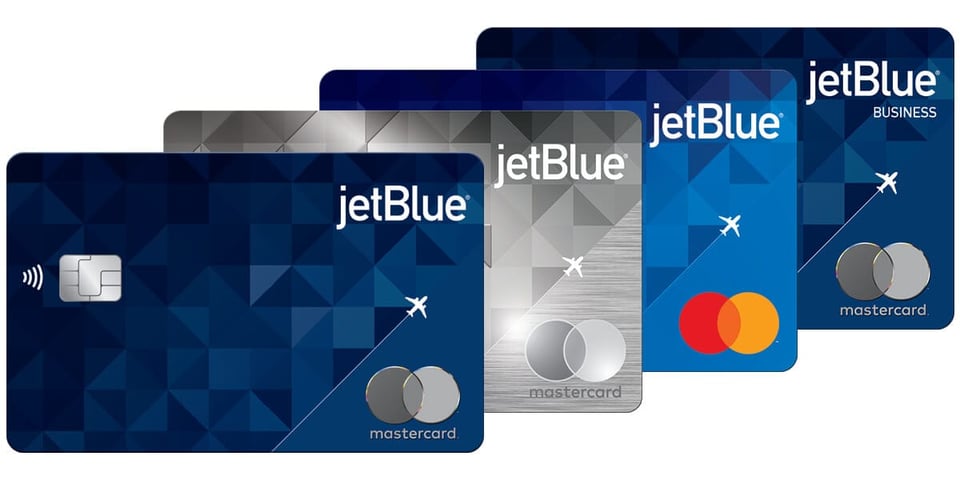
The full JetBlue card lineup now has four cards:
CardsFTW
CardsFTW, released weekly on Wednesdays, offers insights and analysis on new credit and debit card industry products for consumers and providers. CardsFTW is authored and published by Matthew Goldman and the team at Totavi, a boutique consulting firm specializing in fintech product management & marketing. We bring real operational experience that varies from the earliest days of a startup to high-growth phases and public company leadership. Visit www.totavi.com to learn more.
Interested in reaching our audience? You can sponsor CardsFTW.
*Indicates a company with which Totavi has a financial relationship.