
Dear Discover, Is this the End - CardsFTW #203
Does “Discover Network” have meaningful brand equity, and what will happen next in the Capital One integration?
Is it time for the Capital One Network?
Like many Discover Card cardholders, I received an email last week informing me that on July 27, 2026, I will need to start using the Capital One app, ending the era of Discover’s direct consumer engagement.
I’ve written about the Capital One acquisition of Discover a few times (see Capital One to Acquire Discover - CardsFTW #94, Discover Capital One / Capital One Discover - CardsFTW #156, and Discover Network Challenges - CardsFTW #181. While this isn’t the end of Discover (more like a new beginning in certain ways), I wanted to take the time to review the history of the Discover Card.
Discover: A History
The first Discover card purchase was for $26.77 on September 17, 1985 at an Atlanta-area Sears store, performed by a Sears employee. At the time, Sears was the nation’s largest retailer. Beyond Amazon.com today, and much like Walmart, Sears was the everything store. A major Sears location had clothing, furniture, housewares, and jewelry, plus appliances and auto repair. Small towns (like where I grew up) had small Sears stores that might only do auto and appliances. Everyone had access to the Sears catalog, which, over the years, sold everything from toys to entire houses.
Traditional retailers, like Sears, and many small-town merchants, were original providers of retail credit. While few retailers today offer their own credit, instead partnering with banks and fintech companies to provide purchase financing, retailers have been selling on credit for hundreds of years. In 1981, as part of its path to expand its financial services, Sears acquired Dean Witter Reynolds, a brokerage firm. In addition to two other companies (Coldwell Banker, now part of Compass) and Greenwood Trust Company, Dean Witter was part of Sears’s financial services group.
In 1986, the Discover card launched nationally in a Super Bowl XX commercial featuring a muscled, half-naked man pole vaulting (?)
80s ads are weird
I’m fascinated by the language used by this ground-breaking product. The Discover Card has zero fees and “cash dividends” (e.g., cashback), both of which were a rarity at the time.
As a national merchant, Sears, with subsidiaries, once had more than 3,400 stores nationwide, giving it a meaningful initial footprint of acceptance locations. By 1989, Discover Network had signed its 1,000,000th merchant (Vicente’s Restaurant in Wilmington, DE).
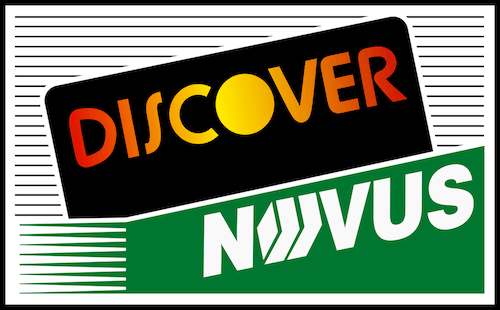
In 1993, under pressure to focus its efforts, Sears spun off Discover into Dean Witter, Discover and Co. Discover was quick to the Internet, with discovercard.com launching in 1995 (and, I assume, sunsetting in 2026, a solid 31-year run). Also in 1996, Discover’s network and processing arm changed its name to NOVUS (which only lasted a few years), although I do love a good Discover/Novus sign.
For completeness of the wild corporate story, in 1997, Dean Witter, Discover merged with Morgan Stanley and the underlying bank, Greenwood Trust (first founded in 1911!), which was renamed Discover Bank. Discover was spun off from Morgan Stanley in 2007 as an independent company and was acquired by Capital One in 2025.
Sponsored by adjoe
Join adjoe and CardsFTW for The Fintech Loyalty Workshop on Wednesday, May 27, at Fintech Week SF.

A candid, peer-to-peer workshop + intimate dinner for senior fintech execs to rethink the teams, KPIs, and partnerships that drive lasting loyalty. Moderated by Matthew Goldman.
While Discover has more than 20 network alliance partnerships worldwide for acceptance, owning the O.G. Diners’ Club network, plus partnering with BC Card in South Korea, JCB in Japan, UnionPay in China, and many others for 185 countries in total, the company has long suffered from the perception (and reality?) of limited acceptance.
The 2020 Super Bowl commercial (25 years after launch) was about acceptance:
better ad, but felt a little like protesting too much
And even last year:
A do like this campaign
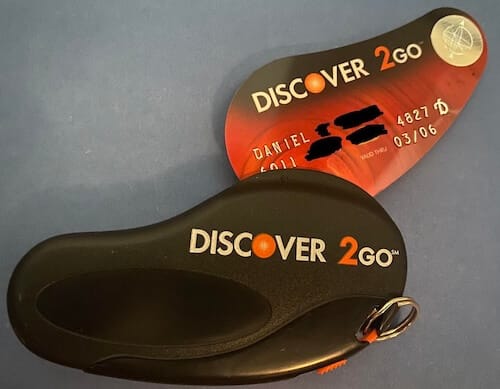
(A quick side-note: the review of the Discover timeline reminded me that in 2002, I had one of these lovely “keychain credit cards.” Yes, I was a payments nerd even in college.)
Looking forward
Capital One acquired solid brand equity (many people love their Discover card for simplicity, lack of fees, and U.S.-based customer service). The big win, I think, is the Discover Network.
No one in the U.S. has built a new payment network at scale in retail since Discover started in 1985, while being owned by the nation’s largest retailer. That is unlikely to change.
I am not surprised by the rapid shift of Discover Card products to Capital One. If I were the betting type, I would wager that your “Discover it” card of today will be a “Capital One Discover” or “Capital One Quicksilver” card in the next 18-24 months. Why maintain two brands and spend all that money? Prior to the acquisition, Discover was spending more than $1B on marketing against Capital One’s $4.6B. Best not to spread the dollars out.
What will happen to the network? Discover’s network brand has its acceptance challenges. Yet, renaming it to Capital One isn’t the obvious answer.
Why Discover Will Remain
Discover Network, like American Express, operates in two modes. In the first mode, it is a three-party network system: cardholder, merchant and a combination bank, and network. The combination party directly interacts with the end users.
In the second mode, Discover Network operates as a four-party network: cardholder, merchant, bank, and network. Like Visa and Mastercard, in this mode the network works through an intermediary to access consumers (and in the case of Visa and Mastercard, an intermediary for merchants as well). An example of four-party cards on these networks includes the Coinbase American Express (issued by First Electronic Bank, but operating on the American Express Network). Few cards run on the Discover Network, although some fintech programs like Marqeta’s original direct-to-consumer product and Jiko’s card have (as well as a Green Dot card, once upon a time).
The big question here is: Does Capital One aspire to operate a network for other banks?
A good reason to say no is: focus on Capital One. With the acquisition of Discover, Capital One is the nation’s third-largest issuer for 2025 (according to the Nilson Report, Issue 1302). Drive that brand equity home and be Capital One for Capital One. Save all those network earnings.
A good reason to say yes is: make more money. Networks have large fixed costs (compliance for merchants, processing, etc.), but low variable costs. The more volume you can run on the network, the more profitable it can be. With a new name (Capital One, something else?) the network may be able to shed its (somewhat unfair) reputation for limited acceptance. Plus, Capital One may be able to grow its network of merchants by saying, “Do you want to accept Capital One cards? If so, join up.”
I doubt the network business is the primary reason behind the merger (just using the network for its own purposes is enough), but there is some extra money to be made and power to accrue to Capital One. American Express is the only other provider with the three-party advantage.
As we slowly say goodbye to the Discover Card (goodbye app, goodbye rewards at point-of-sale, goodbye brand?), we are saying hello to Discover Network (hello Discover Network on my Capital One debit card, hello Discover Network Capital One Venture Card). I predict a lot more Discover Network in our future (and I also predict a new name).
CardsFTW
CardsFTW, released weekly on Wednesdays, offers insights and analysis on new credit and debit card industry products for consumers and providers. CardsFTW is authored and published by Matthew Goldman and the team at Totavi, a boutique consulting firm specializing in fintech product management & marketing. We bring real operational experience that varies from the earliest days of a startup to high-growth phases and public company leadership. Visit www.totavi.com to learn more.
Interested in reaching our audience? You can sponsor CardsFTW.