
Buckle Up for Rewards - CardsFTW #153
Plus, Bilt updates, Crypto.com, free coffee, and more
Fasten Rewards Card Launches
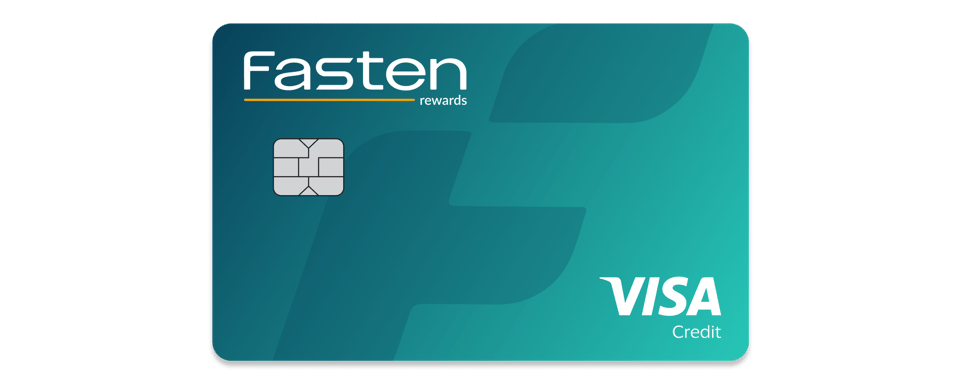
The new Fasten Rewards Visa Card launches today! It’s the first card I know of that rewards you with points just for paying your auto loan or lease on time. On top of that, it offers accelerated earnings: 3x points at partners, 2x points on gas, auto service and parts, insurance, and other auto-related categories (plus, of course, 1x everywhere else).
I’m proud to have collaborated with the Fasten team to bring the Fasten Rewards Card to life. At Totavi, we are all about helping entrepreneurs, startups, and established companies build compelling payment and card experiences. This is an exciting card to get to its public launch!
While several cards on the market offer accelerated earnings on gas, EV charging, or parking, Fasten stands out by rewarding auto loan and lease payments too, plus offering broad coverage across auto-related and insurance spend. That make this an excellent product for everyone in the U.S. who drives (which is most adults). Auto spend is one of the most significant costs in a household, after rent or mortgage, and is accelerating rapidly, especially with the recent changes in tariffs.
Learn more about Fasten Rewards, read all the necessary disclaimers, and apply at fasten.cc. I look forward to hearing feedback on this product from all the readers of CardsFTW.
Crypto.com Credit Card Coming
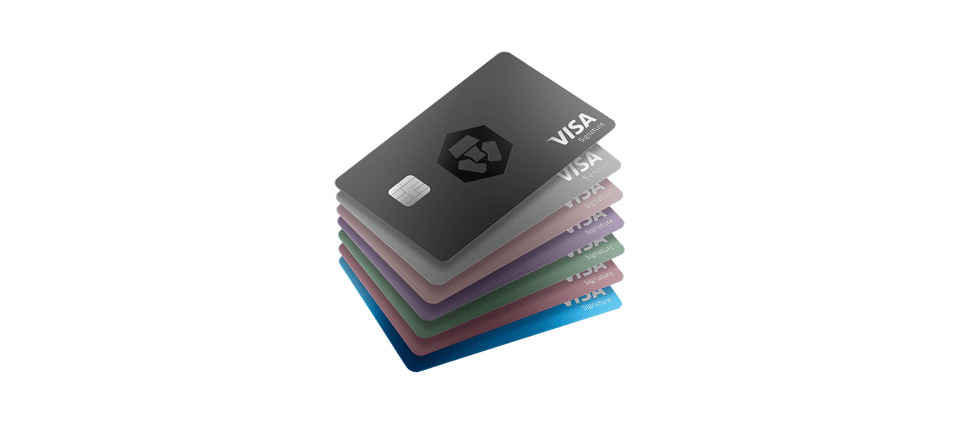
Crypto.com joins the parade of crypto companies launching full credit cards soon. Last week, the company announced a new credit product in partnership with traditional co-brand issuer Bread Financial (formerly known as Comenity, formerly known as Alliance Data).
I previously highlighted new cards from Fold (CardsFTW #145) and MetaMask (CardsFTW #146). The shift in regulatory posture in the U.S. and the continued growth in interest and long-term value in cryptocurrencies will continue to drive the integration of crypto to legacy centralized financial products.
Crypto.com has long offered a debit card program that aligns with their CRO rewards platform. You can earn higher cashback levels depending on how much crypto you stake via Crypto. The base Midnight Blue card earns 1.5% cashback, while the top-level Obsidian card earns 5% cashback (paid in CRO).
The tiers do seem complicated; there are extensive footnotes. You can select a new tier once every 12-month period, and you must lock in every 12 months or stake the required amount for a year. To get to Obsidian, you will need to stake $500,000. Community Federal Savings Bank issues the existing debit card product.
More crypto cards are coming. I can feel it. Stay tuned.
Bilt Enhances Its Rewards Options
Bilt is the most successful fintech credit card startup. Everyone also loves to hate on them because of the negative news about their Wells Fargo deal (which appears to cost Wells Fargo money). Bilt seems to be doing very well and they continue to expand their rewards network and offers.
There were three announcements in the past week or so, although one of them was pulled back. I was impressed to see Bilt announce a deal with Southwest Airlines to enable transfers at a 1:1 rate between Bilt points and Southwest points. That’s a really good deal! I think of Southwest as an airline that is very picky about its partners, and likely has a very carefully worded exclusivity with Chase for credit card points, so this one stood out to me.
The second announcement was that Bilt would add Japan Airlines as a transfer partner. This disappeared from the web, but you can read briefly about what was there on AwardWallet’s blog. We’ll keep an eye out for an update.
The third big announcement was Bilt adding student housing facilities to its network and enabling direct paydown of student loans from points at 1 cent per point. The optimizer in me says that’s a decent deal, but not as good as a Southwest transfer, so depending on your needs, plan accordingly!
Aven
Aven, the provider of a home equity-backed security credit card for affluent homeowners, announced Aven Advisor. This is a super clever marketing and data play. Aven promises you a free $5 Starbucks gift card each week when you qualify (with a house with equity, a good DTI ratio, and a high credit score). You must connect your identity to get a free credit score and connect your checking account via Plaid to verify income.
The app looks good, but it is in the early days. I don’t seem to qualify. I think my DTI is OK (but I can’t tell what Aven thinks my income is). Also, Aven is using HAUS for valuations, and I strongly disagree with my home value (as do Zillow and Redfin). It’s off by more than 30%. Let me know if you try it.
Free Scores: FICO vs. VantageScore
I’ve been spending quite a bit of time lately comparing FICO scores to VantageScores. It’s not just me: Alex covered this in his recent FinTechTakes article: “Everyone Wants To Be The FICO of Cash Flow Data”. This conversation has two sides: first, on the issuer and second, on the consumer.
Most major credit card issuers use FICO scores to underwrite new credit card applicants. FICO is an independent company from the credit bureaus and uses bureau data to generate a score. The bureaus created a joint venture to have their scoring model (and capture some of the revenue going to FICO) with VantageScore. Some issuers, especially fintech cards, have started to use VantageScore as it is less expensive. Vantage also claims that they can score more of the population than FICO, and they do a better job with the middle and lower end of the credit spectrum.
Many consumers get their free credit scores from sites like CreditKarma and NerdWallet or directly from card issuers like Capital One or American Express. Many consumer fintech websites (e.g., CreditKarma) use VantageScores, while most banks use FICO scores. This creates an interesting separation: although the range (300-850) is the same (excluding FICO 9, which goes to 900), the values are very different.
Anecdotally, my FICO score routinely runs 50-75 points higher than my VantageScore. I also find Vantage much more sensitive to credit utilization. A recent large charge and timing impacts had one free site telling me my Vantage Score was 699, while a bank told me my FICO was 813! It's hard enough for consumers to understand one credit score, let alone two separate systems.
I picked up this topic this week because CapitalOne announced that it will be switching its free credit score application to FICO scores from VantageScores. While one can argue that the monopoly of FICO is a problem, I am in favor of consumers having access to the same scores that banks use.
CardsFTW
CardsFTW, released weekly on Wednesdays, offers insights and analysis on new credit and debit card industry products for consumers and providers. CardsFTW is authored and published by Matthew Goldman and the team at Totavi, a boutique consulting firm specializing in fintech product management & marketing. We bring real operational experience that varies from the earliest days of a startup to high-growth phases and public company leadership. Visit www.totavi.com to learn more.
Interested in reaching our audience? You can sponsor CardsFTW.